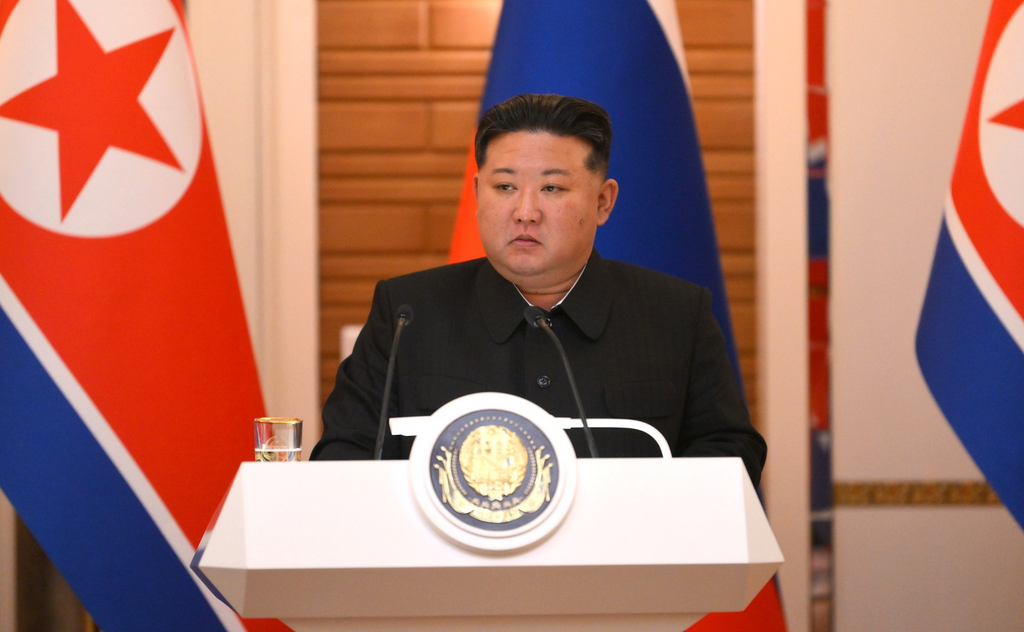
North Korean leader Kim Jong Un recently met with delegates from the ruling party’s youth league congress in Pyongyang, reinforcing the government’s focus on young people as a driving force behind national development and military efforts. According to state media KCNA, the meeting followed the Eleventh Congress of the Socialist Patriotic Youth League, a major political event held every five years to mobilize citizens aged 14 to 30.
The congress concluded with large-scale celebrations, including mass rallies, torchlight parades, and a gala event in the capital. During his address, Kim described the nation’s youth as the “vanguard” of state progress, emphasizing their critical role in implementing party directives. He called for stronger ideological discipline and tighter organizational control within the youth league, underscoring its importance in maintaining political stability.
In a message published by the ruling Workers’ Party, North Korea explicitly linked youth loyalty to its involvement in Russia’s war in Ukraine. The statement praised young soldiers deployed overseas, describing them as having “become bombs and flames” in defense of national honor. Reports from South Korean, Ukrainian, and Western officials estimate that North Korea has sent around 14,000 troops to support Russian forces, particularly in the Kursk region. These sources also claim that more than 6,000 North Korean soldiers have been killed in the conflict.
Kim Jong Un recently unveiled a memorial in Pyongyang dedicated to those who died during these military operations, further highlighting the regime’s emphasis on sacrifice and patriotism among its youth. At the same time, the government has intensified its crackdown on foreign cultural influences, especially South Korean media. Exposure to foreign music, films, or slang is now treated as a serious political offense, reflecting efforts to tighten social control.
Kim has also drawn attention by appearing more frequently in public with his young daughter, believed to be Ju Ae, signaling potential future leadership symbolism. Overall, North Korea’s youth policy continues to play a central role in shaping both domestic governance and its international military stance.