North Korean leader Kim Jong Un said he is open to dialogue with the United States if Washington abandons its push for denuclearisation, though he made clear he will never surrender his nuclear arsenal in exchange for sanctions relief. Speaking at the Supreme People’s Assembly, Kim said North Korea’s nuclear weapons are essential for survival against what he called U.S. and South Korean threats.
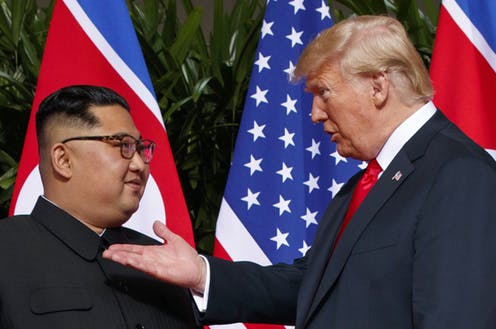
Despite rejecting negotiations with Seoul, Kim expressed rare warmth toward U.S. President Donald Trump, recalling their three meetings and saying he still holds “fond memories.” Analysts see this as a signal to Trump to reconsider U.S. policy and pursue talks without preconditions. Kim’s remarks came as South Korean President Lee Jae Myung urged Washington to reopen dialogue, proposing a phased deal that freezes Pyongyang’s production of an estimated 15–20 nuclear bombs annually as a step toward long-term disarmament.
Kim dismissed the phased approach, arguing the U.S. seeks regime change regardless of its proposals. He stressed that sanctions have only strengthened North Korea’s resilience, insisting, “We will never give up our nuclear weapons.” North Korea has been under U.N. sanctions since its first nuclear test in 2006 but continues to advance its nuclear and missile programs.
Lee countered that sanctions and pressure have failed, urging Trump to meet Kim during his upcoming visit to South Korea. However, experts suggest Kim’s statements aim to sideline Seoul, portraying the nuclear issue as solely between Pyongyang and Washington.
While the South Korean government remains committed to creating conditions for dialogue, Kim’s rejection of denuclearisation underscores the deep impasse. For now, Pyongyang signals openness to talks only if Washington accepts North Korea as a permanent nuclear power.