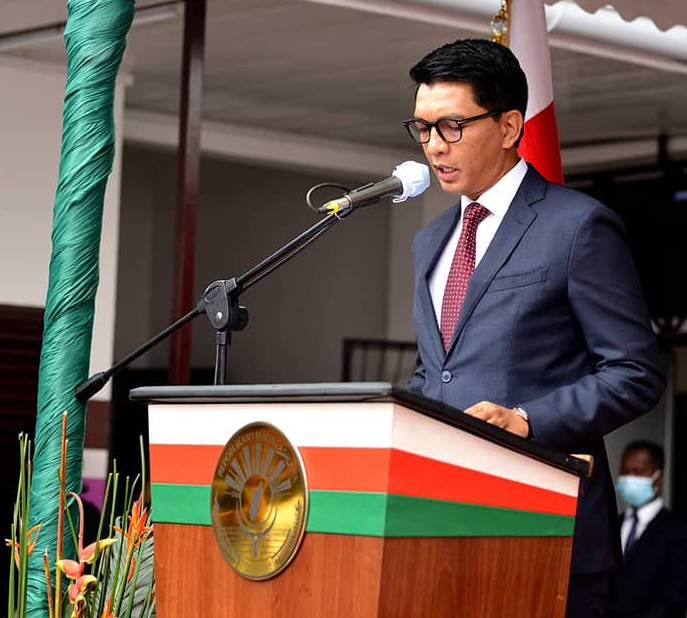
Madagascar’s President Andry Rajoelina announced on Monday that he is dissolving his government following three days of massive youth-led protests against water shortages and power cuts. The demonstrations, inspired by recent “Gen Z” movements in Kenya and Nepal, have become the largest in years and pose the most serious challenge to Rajoelina since his re-election in 2023.
According to the United Nations, at least 22 people have been killed and over 100 injured, with casualties including both protesters and bystanders. The unrest escalated into widespread violence and looting carried out by individuals and gangs not directly tied to the demonstrations. Madagascar’s foreign ministry disputed the UN’s figures, claiming they were based on unverified sources.
In a televised speech on Televiziona Malagasy (TVM), Rajoelina apologized for the government’s failure to resolve basic infrastructure issues and pledged reforms. “I understand the anger, the sadness, and the difficulties caused by power cuts and water supply problems. I heard the call, I felt the suffering, I understood the impact on daily life,” he said. The president also promised to support businesses that suffered losses during the unrest and emphasized the need to open dialogue with young citizens.
Protesters, many of them students, gathered at a university waving placards and singing the national anthem before attempting to march to the city center. Security forces responded with teargas after authorities imposed a dusk-to-dawn curfew. Demonstrators adopted a protest flag originally used in Nepal, symbolizing solidarity with global youth movements pushing for political accountability.
Rajoelina, who first seized power in a 2009 coup, stepped down in 2014 but returned after winning the 2018 election and secured a third term in 2023. His latest political crisis highlights deep frustrations over governance and essential services in the Indian Ocean nation, as youth-driven activism reshapes the country’s political landscape.