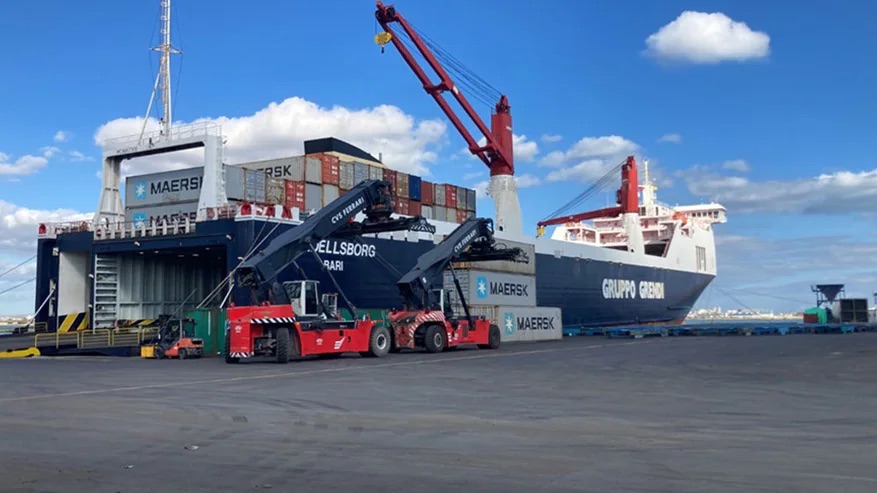
Maersk, the renowned shipping container giant, has announced an ingenious plan to tackle the current issue of low water levels in the Panama Canal. In response to the authorities' limitation on the number of large ships passing through, Maersk will utilize a freight railroad as an alternative route.
According to Reuters, this strategic decision aims to maintain the company's commitment to timely deliveries and efficient operations.
Shifting Routes and Utilizing the Panama Canal Railway
Yahoo reported that Maersk's Oceania-Americas (OC1) service, which usually transits the canal via cargo ships, will now rely on the Panama Canal Railway. This 47-mile railroad runs parallel to the canal and effectively links the Atlantic and Pacific oceans.
By implementing this alternative route, Maersk aims to ensure seamless connections between Australia, New Zealand, and ports in Philadelphia and Charleston, South Carolina.
With the proposed changes, Maersk plans to create two separate rail loops dedicated to cargo destined for the Atlantic and Pacific. Pacific vessels will turn at the Port of Balboa in Panama, catering to cargo headed for Latin America, North America, Australia, and New Zealand.
Conversely, Atlantic vessels will turn at Panama's Port of Manzanillo, serving cargo destined for Latin and North America, Australia, and New Zealand. Although some southbound vessels may experience slight delays, Maersk does not anticipate any disruptions for northbound vessels docking in Philadelphia and Charleston.
Adapting to Dynamic Conditions
The decision to navigate the Panama Canal Railway stems from the unprecedented drought affecting Panama, resulting in reduced transits for larger container ships.
In light of these circumstances, container vessels traditionally relying on the Panama Canal to transport Asian exports to East and Gulf Coast ports have redirected their routes via the Suez Canal. The threat of piracy from Yemen's Houthi rebels prompted ships to begin rerouting from the Suez Canal, opting for longer oceanic voyages around the Cape of Good Hope.
Among the adjustments made, Maersk has decided to omit Cartagena, Colombia, which serves as the country's main export port. This strategic change aims to optimize cargo operations and streamline the supply chain amidst the prevailing challenges posed by low water levels in the Panama Canal.
Despite these adaptations, Maersk will continue operating its PANZ sailings, facilitating container transportation between Los Angeles, Oakland, Seattle, Australia, and New Zealand ports. The company remains committed to minimizing potential disruptions and constantly communicates with the Panama Canal Authority to provide timely updates.
Photo: Maersk Press Room