One of the goals space agencies have when it comes to Mars is searching for alien life. As scientists look into how and where to look for possible signs of life, the answer to that may lie in our own deserts.
A study published in the journal Nature Scientific Reports details the discovery of diverse microbes in the soil of Chile’s Atacama desert. The microbes were found a meter under the surface and scientists now believe that this may also be found in Martian soil. This discovery could potentially shed light on future probes on the red planet for signs of life. Should this be proven on Mars, scientists would then be tasked to finding a place on the red planet that is rich in clay that could be a “hotspot” for microbial activity.
“The clays are inhabited by microorganisms,” said the study’s co-author Alberto G. Fairen of the University of Cornell. “Our discovery suggests that something similar may have occurred billions of years ago - or it may still be occurring - on Mars. If microbes still exist today, the latest possible Martian life may still be resting there.”
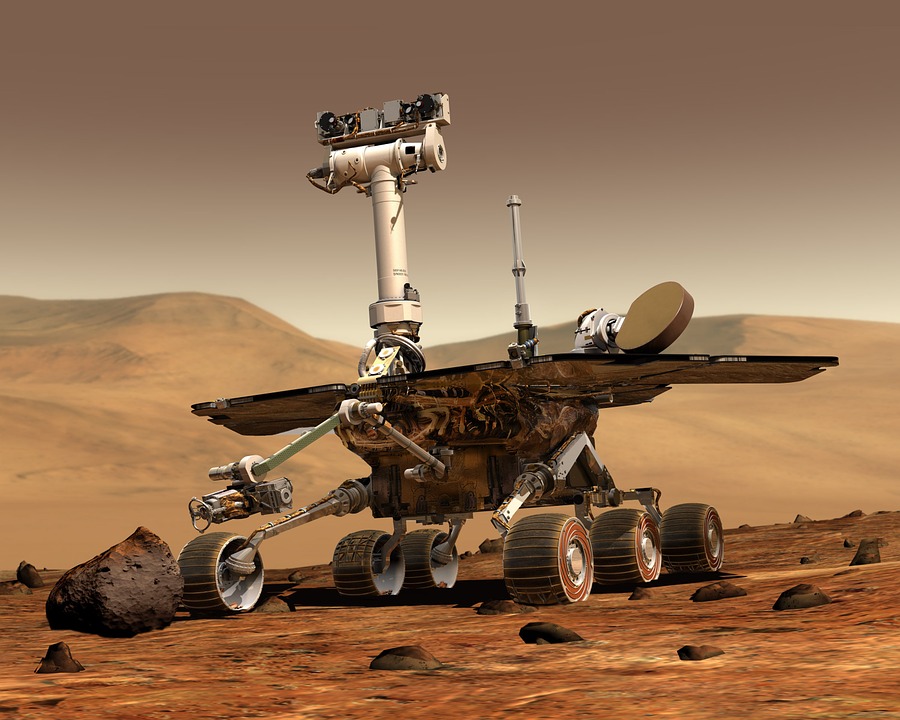
Researchers believe that this study could be used as a guide in the search for life on the Red Planet. Two rovers are currently on their way to Mars. NASA’s Perseverance Rover is already on the journey to the red planet and is expected to touch down next year in February 2021. A few years later, the Rosalind Franklin rover from Europe is expected to make the journey in 2023.
Astronomers are continuously studying our neighboring planet as part of learning about our Solar System and learning about how our universe came to be. A group of scientists from the United Kingdom has previously discovered one asteroid similar to the Moon, orbiting behind Mars and it has led them to believe that this may be the Moon’s long-lost companion. The asteroid is believed to have been formed billions of years ago, just when the Solar System was newly formed.
The astronomers found that this belongs to a rare type of asteroid called Trojan asteroids which share the same orbit as Mars.