


 Trump Warns Houthis Over Attacks, Considers Erdogan Intervention
  Trump Announces Massive Oil and Mineral Exploration Plans in Greenland
  Flavio Bolsonaro Backs Brazil’s 40-Hour Workweek Reform Ahead of Runoff
  Gaza Olive Harvest Collapses as War Destroys Farmland
  Italy’s Meloni Warns US-Russia Diesel Deal Could Weaken Ukraine Sanctions
  Elon Musk Donates $366 Million to 2026 US Midterms
  US Condemns China Sanctions on Taiwan Allies Belize and Paraguay
  MI5 Warns of Rising Iran, Russia Threats and AI Bioweapon Risks
  China Warns Taiwan Over South China Sea Coast Guard Incident
  Trump Confirms US Intelligence Sharing With Ukraine Amid Russian Strikes
  Zelenskiy Says Trump’s Support for Russia Is ‘Painful’
  Most Americans Oppose Election Betting on Prediction Markets, Poll Finds
  US Justice Department Drops Prosecution of Ex-CIA Analyst Sue Mi Terry
  China Resumes US Soybean Purchases After Trump-Xi Summit
  Netanyahu Rejects Preemptive Iran Strike Ahead of Israel Election
  Trump Denies Russia and China Are Helping Iran in U.S. Conflict
  US Senate Midterms 2026: Key Races That Could Flip Control


 Add as a preferred source on Google
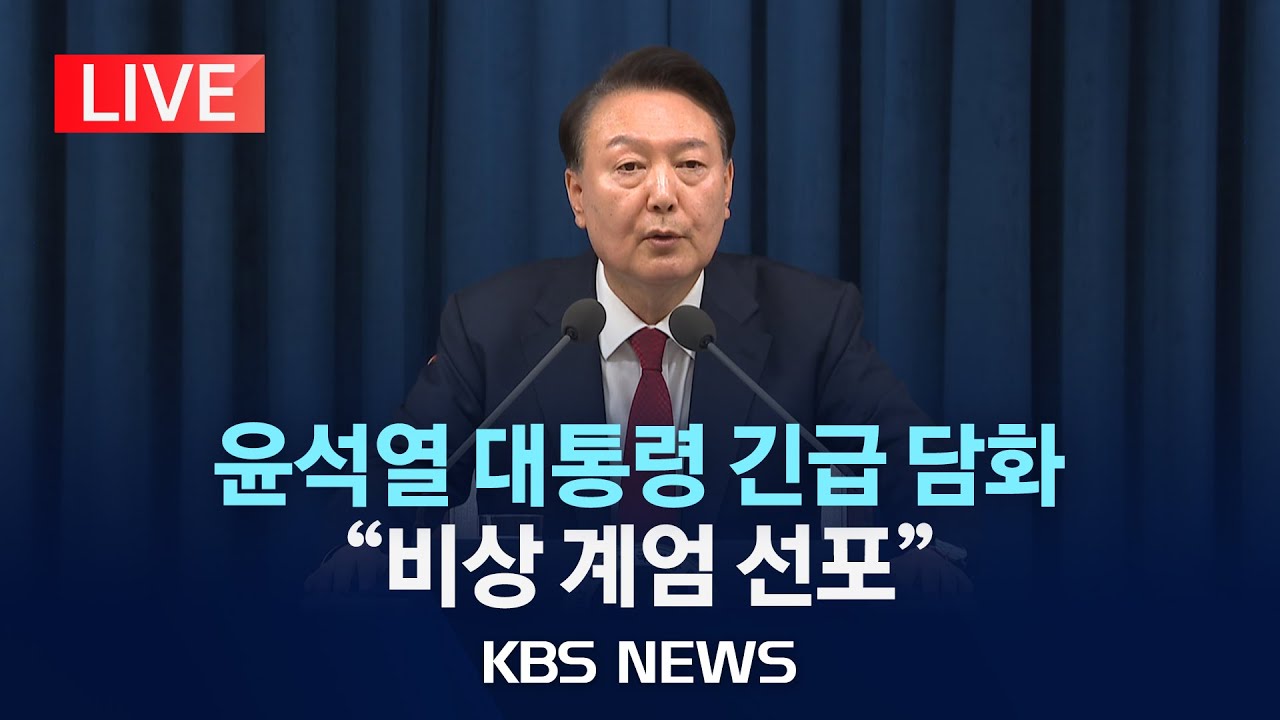
South Korean President Yoon Suk Yeol made a dramatic declaration of martial law Tuesday night, alleging that opposition forces are engaging in "anti-state activities." The announcement, delivered during a live televised address, has sparked a political firestorm, raising concerns about democratic stability in the nation.
“This is an unavoidable measure to ensure the freedom and safety of the people and guarantee the sustainability of the nation,” Yoon said in his address on YTN television. He framed the move as essential to protecting South Korea’s constitutional order against perceived threats from pro-North Korean elements and opposition lawmakers.
The declaration comes amidst heightened political tension between Yoon’s conservative People Power Party (PPP) and the liberal Democratic Party, which holds a parliamentary majority. Critics have accused Yoon of leveraging martial law to sidestep opposition and consolidate power, a charge he denies.
Opposition Rejects Martial Law, Calls for Emergency Action
The Democratic Party swiftly condemned the announcement, convening an emergency meeting to strategize against the president’s declaration. Party leaders argue that the measure undermines the very freedoms Yoon claims to protect.
Han Dong-hoon, leader of Yoon’s own PPP, publicly opposed the move. “The declaration of martial law is wrong,” he stated, pledging to stand with the people against the measure.
Since taking office in 2022, Yoon has faced an uphill battle to implement his agenda in a parliament controlled by opposition forces. The ongoing impasse over the 2025 budget bill has deepened political rifts, with Yoon accusing the assembly of cutting vital public safety and drug prevention funds.
“This has left our citizens in a state of chaos,” Yoon claimed. “The nation is becoming a haven for drugs, and public safety is collapsing.”
Political Scandals and Budget Stalemates Fuel Crisis
Yoon’s administration has also been dogged by scandals, including allegations against his wife and senior officials. Calls for independent investigations have gained momentum, but Yoon has resisted, fueling accusations of authoritarianism from his political adversaries.
The declaration of martial law introduces uncertainty about how the government will operate in the coming weeks. Yoon did not specify what actions would be taken under martial law, leaving both supporters and critics bracing for potential disruptions to civil liberties and government functions.
The Democratic Party has cited the impeachment of top prosecutors and its rejection of Yoon’s budget proposal as legal avenues to hold the administration accountable. However, Yoon has dismissed these moves as part of a broader attempt to destabilize his government.
Netizens React to Yoon’s Drastic Measures
The president’s declaration has ignited a heated online debate.
- “Martial law in a democracy? This sets a dangerous precedent for South Korea,” wrote @SeoulCitizen.
- “Yoon claims this protects freedom, but it feels more like an attack on it,” tweeted @FreedomForSK.
- “North Korea must be loving this chaos. We need unity, not division,” noted @KimObserver.
- “Democracy requires compromise, not martial law. Yoon has lost the plot,” posted @BluePenSK.
- “If Yoon is serious about protecting us, why can’t he work with the opposition?” asked @HanPolitico.
- “The opposition should shoulder some blame too. Politics shouldn’t bring the country to a standstill,” added @BalancedViewSK.







