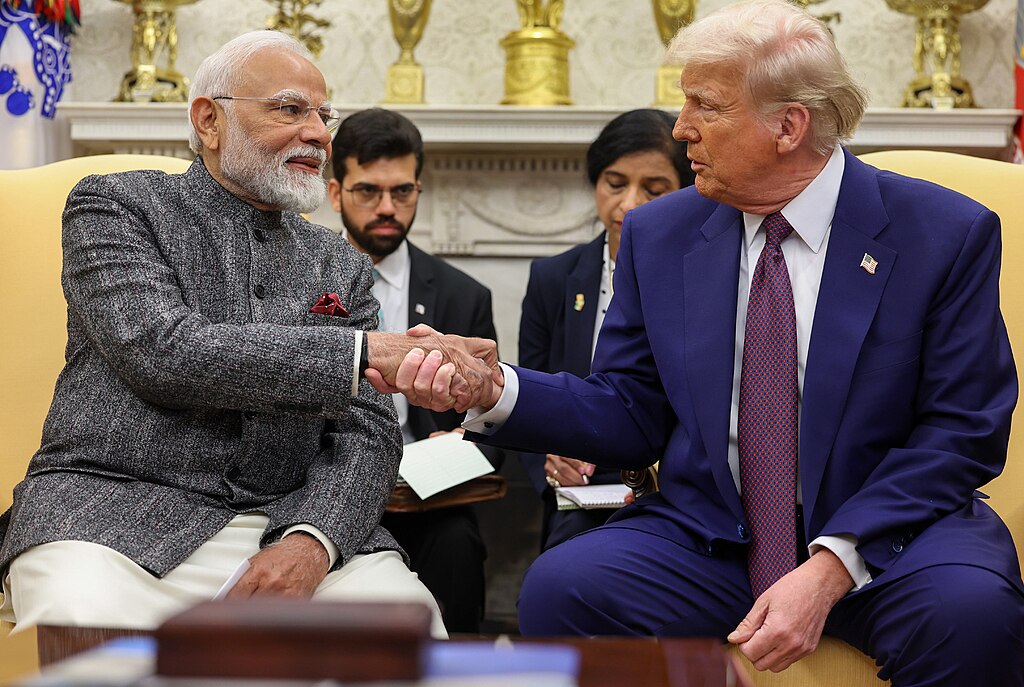
Indian Prime Minister Narendra Modi firmly stated to U.S. President Donald Trump that India would not accept any third-party mediation in its ongoing conflict with Pakistan, reaffirming New Delhi's longstanding stance on the issue. The declaration was made during a 35-minute phone conversation between the two leaders, according to Indian Foreign Secretary Vikram Misri on Wednesday.
Modi’s comments were a direct response to past suggestions by Trump that the U.S. could mediate the Kashmir dispute—a proposal that has repeatedly been rejected by Indian officials, who view the matter as a strictly bilateral issue between India and Pakistan.
The call between Modi and Trump was aimed at discussing regional stability and strengthening bilateral ties, but Modi took the opportunity to reiterate India’s firm opposition to any external involvement in its territorial and diplomatic matters concerning Pakistan.
India and Pakistan have long had a strained relationship, particularly over the disputed region of Kashmir, which has sparked several conflicts and heightened military tensions. India maintains that all matters related to Pakistan, especially Kashmir, must be resolved bilaterally without foreign intervention, in line with the 1972 Simla Agreement.
This latest reaffirmation comes amid renewed geopolitical attention on South Asia and reflects India's intent to uphold its sovereignty in foreign policy dealings. Modi’s clear rejection of international mediation serves as a message to both domestic and global audiences that India will continue to manage its national security and regional disputes independently.
The exchange underscores the importance of strategic communication between India and the U.S., even when their perspectives diverge on sensitive geopolitical issues.