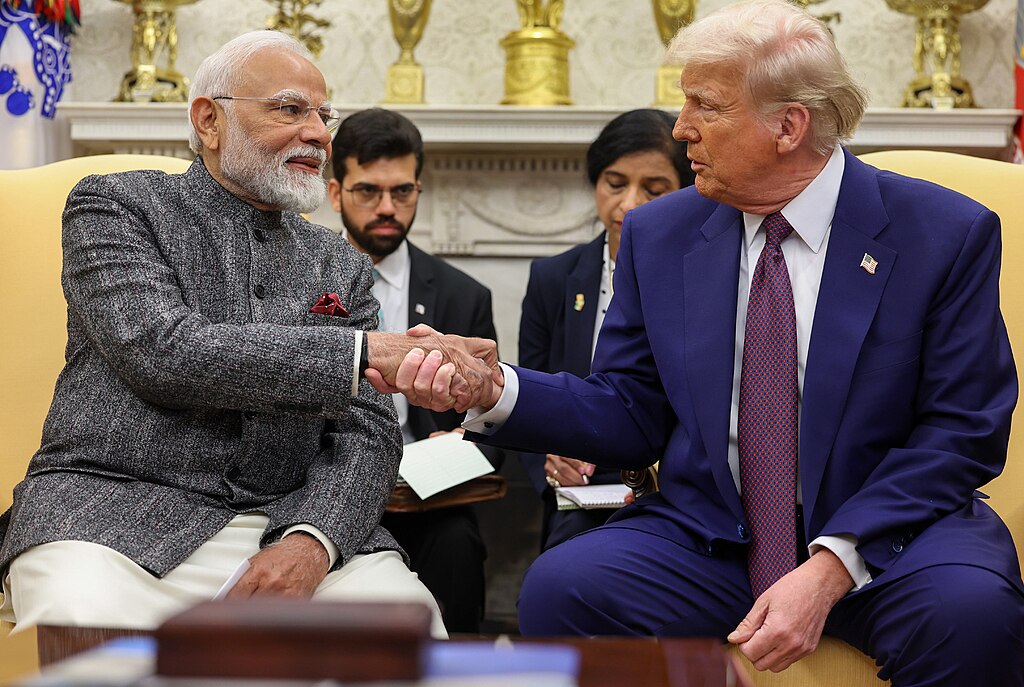
Indian Prime Minister Narendra Modi said he held a phone conversation with U.S. President Donald Trump on Thursday, as New Delhi intensifies efforts to secure relief from steep U.S. tariffs imposed on key Indian exports. The tariffs, which reach as high as 50%, were introduced by Washington to pressure India over its continued purchases of Russian oil amid the Ukraine war.
In a post on X, Modi said the two leaders reviewed progress in India-U.S. bilateral relations and discussed regional and global developments. He described the conversation as “warm and engaging,” adding that both countries would continue working together to promote global peace, stability, and prosperity. A White House official confirmed the call took place but did not provide details on the discussion.
The phone call marked the third conversation between Modi and Trump since the U.S. sharply increased tariffs on Indian goods, affecting exports such as textiles, chemicals, and food products including shrimp. The tariff hike has weighed on trade flows, with Indian exports to the U.S. falling nearly 9% year-on-year in October to $6.31 billion, according to Indian government data.
Trade negotiations between India and the United States stalled in late July after New Delhi resisted opening its agricultural market to U.S. farm products and declined to publicly acknowledge Trump’s role in mediating a previous India-Pakistan conflict. Despite the impasse, talks have continued in recent weeks. U.S. Deputy Trade Representative Rick Switzer concluded a two-day visit to New Delhi this week, holding meetings with Indian officials focused on resolving tariff disputes, although the U.S. Trade Representative’s office declined to comment.
There are signs of movement, as Indian refiners reportedly reduce purchases of Russian crude following new U.S. sanctions on energy giants Rosneft and Lukoil. Meanwhile, Russian President Vladimir Putin, who visited New Delhi last week, pledged uninterrupted fuel supplies and openly challenged U.S. pressure on India.
While U.S. officials say it remains unclear whether a trade deal can be finalized before year-end, analysts believe an agreement is likely given India’s strategic importance to the global economy. Washington continues to push for lower Indian tariffs, reduced non-tariff barriers, and broader access for U.S. agricultural exports such as soybeans and grain sorghum.