


 RBNZ Raises Interest Rate to 2.75%, Kiwi Dollar Slides
  China Boosts Gold Reserves by 650,000 Ounces as Prices Rally
  Australia Inflation Beats Forecasts, Raising RBA Rate Hike Risk
  BOJ’s Himino Signals Timely Rate Hikes as Inflation Risks Rise
  JPMorgan Sees ECB Raising Rates to 2.75% in December


 Add as a preferred source on Google
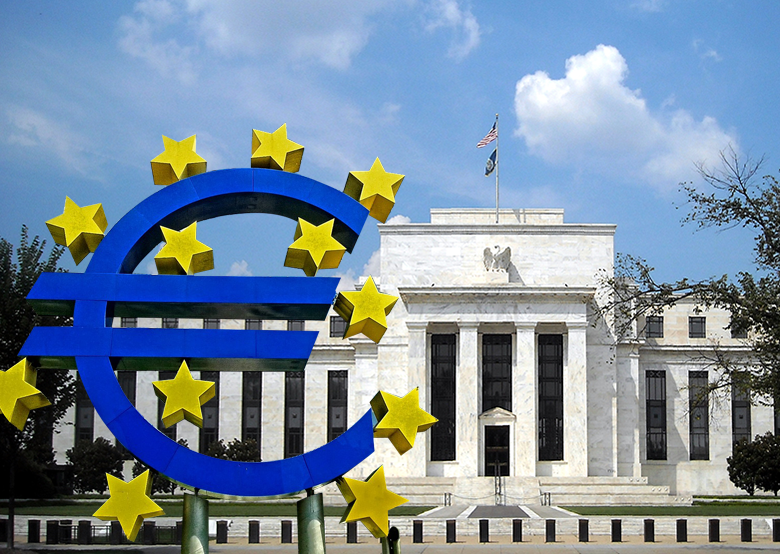
EUR/USD closed above 1.10 yesterday. Effectively, it took back losses incurred for the whole of November. Yesterday's short-covering was in response to European Central Bank member Ewald Nowotny blaming market analysts for expecting too much out of the fresh stimulus measures delivered on 3 Dec. Despite its retracement in the past fortnight, EUR/USD is unlikely to move back into its higher 1.11-1.15 range seen in Aug-Oct. The objective of ECB's quantitative easing program is to ease monetary conditions via a weaker real exchange rate.
In Asia, all eyes are on the Chinese yuan. Despite the EUR's recovery, the central parity for USD/CNY surpassed its post-devaluation high of 6.4085 (27 Aug) yesterday, a new four-year low. Onshore spot USD/CNY achieved this a day earlier, while offshore USD/CNH closed above 6.50 for the first time since 25 Aug. Interestingly, the CNY resumed its depreciation after it was admitted on 3 Dec into the International Monetary Fund's (IMF) Special Drawing Rights (SDR). With exports weak and inflation low, China is seen lowering rates again, at a time when Fed is about to lift rates next week. Meanwhile, the Japanese yen appreciated after Japan upgraded 3Q15 GDP growth from -0.8% (QoQ saar) to +1.0%. Effectively, Japan is no longer in technical recession as thought previously, and hence, less need to consider a new round of stimulus. USD/JPY plunged to 121.42, below its 122.20-123.67 range of the past five weeks.
This morning, AUD/USD climbed back above 0.73 again on receding expectations for the Reserve Bank of Australia to cut rates. Australia's jobless rate fell below 6% for a second month to 5.8% in Nov15 from 5.9% in the previous month. Despite lower oil prices, consumer inflation expectations also picked up to 4.0% in Dec15 from 3.5% in the previous two months. Hence, monetary policy divergences may be starting to deviate based on each country's fundamentals against the looming US rate hike next week.

- News

- Economy

- Central Banks
- Investing
- Research
- Roundups
- Digital Currency
- Insights
- Technical Analysis
- Technology
- Business
- Law
- Health
- Nature
- Fintech
- Science
- Topic
- Opinions
- ©Econometrics LLC . All Rights Reserved.
Monetary policy divergences may be starting to deviate between countries
Thursday, December 10, 2015 2:56 AM UTC
Editor's Picks



- Market Data
Most Popular




