


 NASA's Artemis II Mission: First Crewed Lunar Journey Since Apollo
  Tabletop particle accelerator could transform medicine and materials science
  Eli Lilly’s Inluriyo Gains FDA Approval for Advanced Breast Cancer Treatment
  NASA Artemis II: First Crewed Moon Mission Since Apollo Takes Four Astronauts on 10-Day Lunar Journey
  FDA Pilot Program Eases Rules for Nicotine Pouch Makers
  SpaceX Prioritizes Moon Mission Before Mars as Starship Development Accelerates
  Neuralink Plans High-Volume Brain Implant Production and Fully Automated Surgery by 2026
  Blue Origin New Glenn Explosion Could Delay Launch Operations Until 2028
  Is space worth the cost? Accounting experts say its value can’t be found in spreadsheets
  Trump Administration to Launch Autism Initiatives Targeting Acetaminophen Use and New Treatment Options
  Trump and Merck KGaA Partner to Slash IVF Drug Costs and Expand Fertility Coverage


 Add as a preferred source on Google
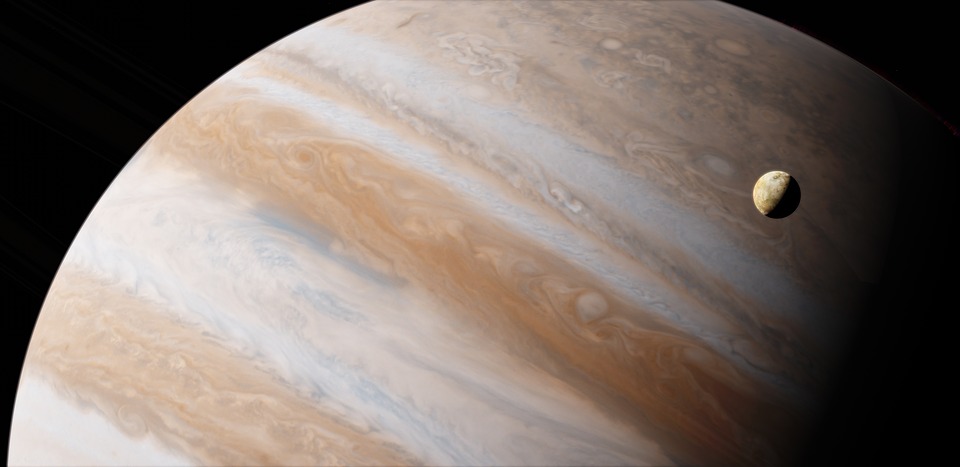
Space agencies like NASA are also observing occurrences in other planets such as the gas giant Jupiter. The agency has since made a discovery on Jupiter with the help of its Juno spacecraft, spotting atmospheric phenomena.
The phenomena seen in Jupiter’s atmosphere are referred to as elves and sprites, after the mythical creatures. These are examples of TLEs or Transient Luminous Events that occur in the high parts of the atmosphere in high storms and are known to be quite unpredictable. These kinds of TLEs have only been observed here on Earth until recently when it was likely seen in Jupiter for the first time by the Juno spacecraft. Juno made the discovery during the summer when its ultraviolet spectrograph instrument detected a brief yet bright flash of ultraviolet light in the gas giant’s atmosphere.
“UVS was designed to characterize Jupiter’s beautiful northern and southern lights,” said Rohini Giles from the Southwest Research Institute who is also the co-author of the study. “But we discovered UVS images that not only showed Jovian aurora but also a bright flash of UV light over in the corner where it wasn’t supposed to be. The more our team looked into it, the more we realized Juno may have detected a TLE on Jupiter.”
Sprites are known to only last a few milliseconds and tend to happen around 60 miles or 97 kilometers into the atmosphere on Earth. This TLE is described as looking similar to jellyfish with a blob of light in its core that measures between 24 to 48 kilometers across. Elves look similar to flat disks of light found in the upper atmosphere and also last for milliseconds. However, elves are much bigger than sprites, measuring up to 300 kilometers across.
Meanwhile, NASA and Elon Musk’s space firm SpaceX have placed its three astronauts into quarantine two weeks before the agencies’ first operational crew launch to the International Space Station. This launch follows the previous practice launch by the two agencies, transporting astronauts Bob Behnken and Doug Hurley to the ISS. Referred to as Crew-1, the first operational flight is expected to take off on November 14.







