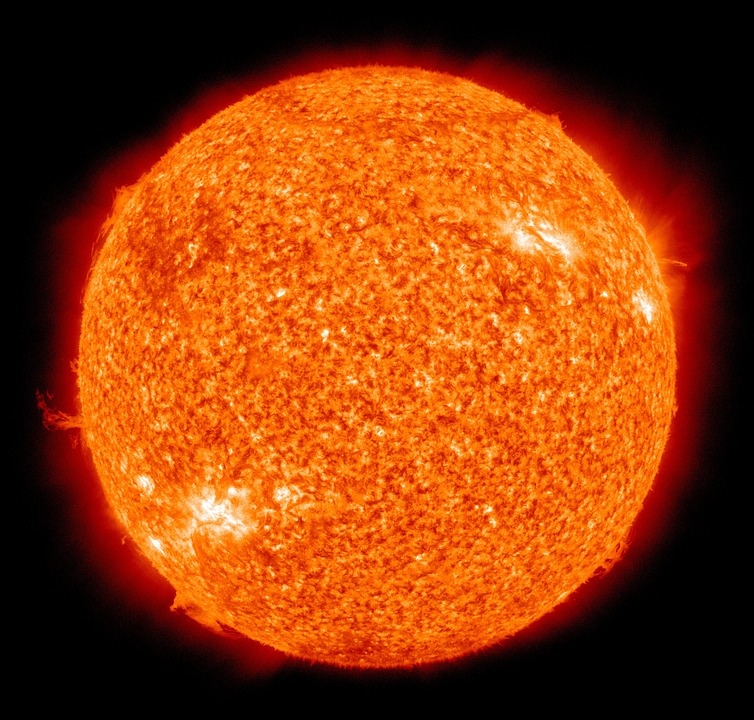
Aside from monitoring meteors and other similar space objects, NASA is also keeping tabs on any activity that may be taking place in our host star itself, the sun. The agency has now predicted that the upcoming solar cycle may be one of its strongest so far.
NASA as well as the National Oceanic and Atmospheric Administration, have predicted that our host star’s activity is predicted to be at its quiet maximum. By July 2025, the sunspot peak would arrive at 115 sunspots. Should this be true, then this would then confirm a long-running theory about solar activity cycles. The Sun’s activity levels are known to differ often with its activity cycles matching up with its magnetic field. Every 11 years, the Sun’s poles change places and scientists have yet to figure out what is causing the cycles.
When the poles switch, the magnetic field strengthens and the solar activity rises to a solar maximum until it subsides in time for the next switch. The most recent solar minimum observed was back in 2019. We are now in its 25th solar cycle since the records started and it appears that we may be heading for a solar maximum.
Despite NASA’s predictions that we may be entering a quiet maximum, the team of Dr. Scott McIntosh of the US National Center for Atmospheric Research follows 22-year cycle observations of the Sun. This is also the widely believed full solar cycle when the poles return to their original positions.
Meanwhile, the agency has now released its goals for its future missions, especially its upcoming Moon mission in 2024. NASA published a report on its Artemis III, detailing its scientific priorities. Among the goals for the upcoming Moon mission involve bringing 85 kilograms of lunar soil samples from both the surface and subsurface back to Earth.
NASA Science Mission Directorate associate administrator Dr. Thomas Zurbuchen released a statement on the agency’s goals. “The Moon holds vast scientific potential and astronauts are going to help us enable that science. This report helps outline a path forward toward the compelling science we can now contemplate doing on the lunar surface in conjunction with human explorers.”