


 US Dollar Hits 18-Month High as Fed Signals More Rate Hikes
  Crypto Market Selloff Wipes Out $100B as Bitcoin Falls Below $83K
  Oil Prices Trim Gains After Trump Rules Out Iran Strikes Before Midterms
  Bank of America Predicts Yen Rebound as USD/JPY Faces Risks
  Trump Secures Russian Diesel Deal as US Fuel Prices Surge
  US Dollar Rises for Fourth Week as Fed Rate Hike Bets Grow
  Gold Prices Rise as Hormuz Tensions Fuel Inflation Risks
  Mike Rogers Calls for End to US-Canada Tariff War
  Asian Currencies Steady as Dollar Eyes Fourth Weekly Gain
  US-Led Coalition Targets Global Factory Overcapacity


 Add as a preferred source on Google
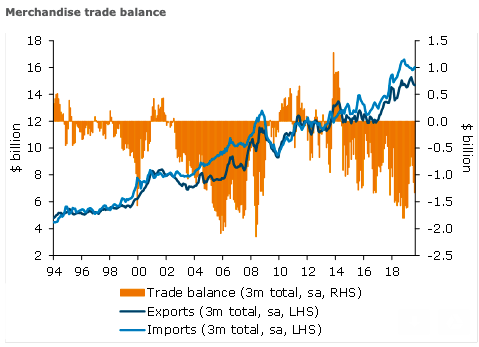
New Zealand recorded one of the weakest trade balances in history with a deficit of $1.56 billion during the month of August, only marginally smaller than the record monthly deficit recorded in September 2018. On an unadjusted basis, export returns were up 3.8 percent y/y in August while imports were up 2.7 percent, ANZ research reported.
Dairy export volumes were down 6.5 percent on a seasonally adjusted basis, while meat exports lifted 5.8 percent. Exports of forestry products were down 4.9 percent on a seasonally adjusted basis, mainly on the back of lower volumes rather than lower prices.
Actual export returns for forestry products fell 13.6 percent y/y in August, reflecting weaker prices. Dairy exports returns were up 6.2 percent y/y while meat returns were down 4.4 percent y/y.
August was a great month for fruit sales, with actual export returns up 18.3 percent y/y and up 4.2 percent on a seasonally adjusted basis. This was driven by a lift in both prices and volumes. Seasonally adjusted volumes for August were up 2.7 percent. Kiwifruit volumes continue to lift with more green fruit exported in August than gold.
August was another strong month for petrol imports with actual values up 9.8 percent y/y, but on a seasonally adjusted basis petrol imports for August were down 5.9 percent following a massive upward swing in July.
New car registrations lifted in August, continuing the upward trend in play since May, but used car registrations eased slightly.
"Looking forward, export volumes for September will be bolstered by the seasonal increase in dairy production. Meat volumes are expected to remain low due to the smaller lamb crop last season, and strong seasonal pasture production keeping cattle on farms," the report further commented.
Image Courtesy: ANZ Research







