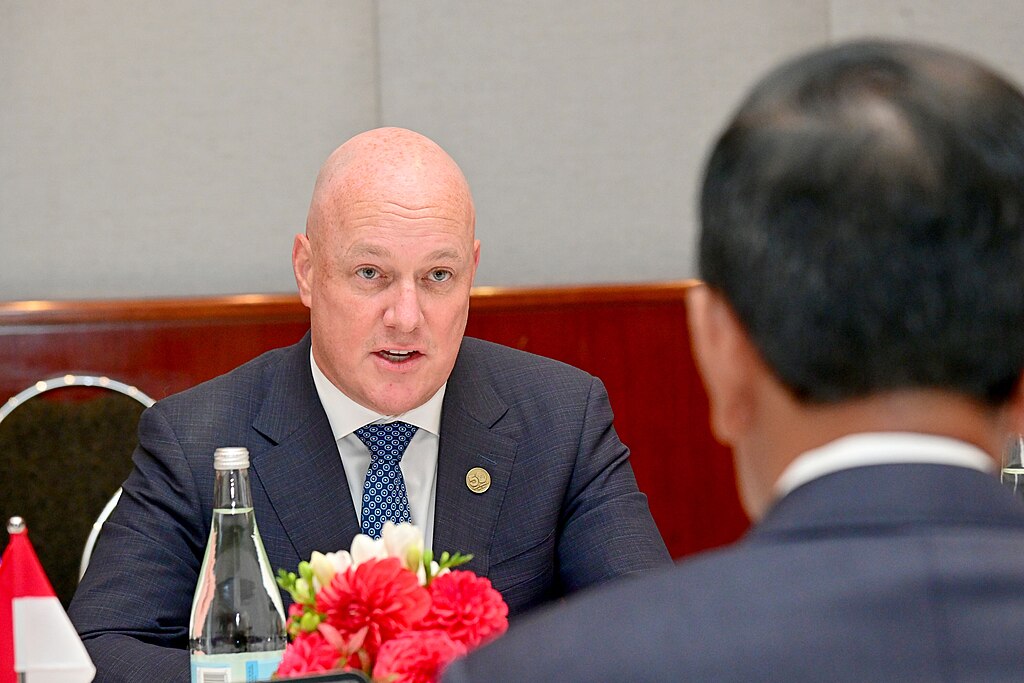
New Zealand Prime Minister Christopher Luxon announced plans to increase capital spending in the upcoming 2025 budget, aiming to strengthen key sectors including health, education, defence, and transport. Speaking at a BusinessNZ event in Auckland, Luxon revealed the government will raise its net capital allowance to NZ$4 billion, up from the NZ$3.6 billion outlined in the previous Budget Policy Statement.
This budget shift is expected to enhance the quality of frontline services for New Zealanders, particularly in healthcare and education, while also addressing infrastructure needs. Luxon emphasized that these investments are critical for delivering long-term value to citizens.
Despite the increased capital expenditure, the government plans to tighten its operational spending. Finance Minister Nicola Willis confirmed last week that baseline spending will be reduced to NZ$1.3 billion—down significantly from the previously forecast NZ$2.4 billion. Luxon noted this move results in the smallest operating allowance in a decade, helping maintain a forecasted surplus under Treasury's new fiscal measure, which excludes the financials of the state-run accident compensation provider.
The Prime Minister acknowledged that Budget 2025 is being prepared amid a complex global environment. He pointed to ongoing trade tensions and a volatile financial market landscape, with recent market downturns only partially recovering. These conditions have led to downgraded growth projections worldwide, further highlighting the need for a responsible and targeted fiscal strategy.
The full budget is set to be released on May 22 and will be closely watched for its impact on economic stability and public services.