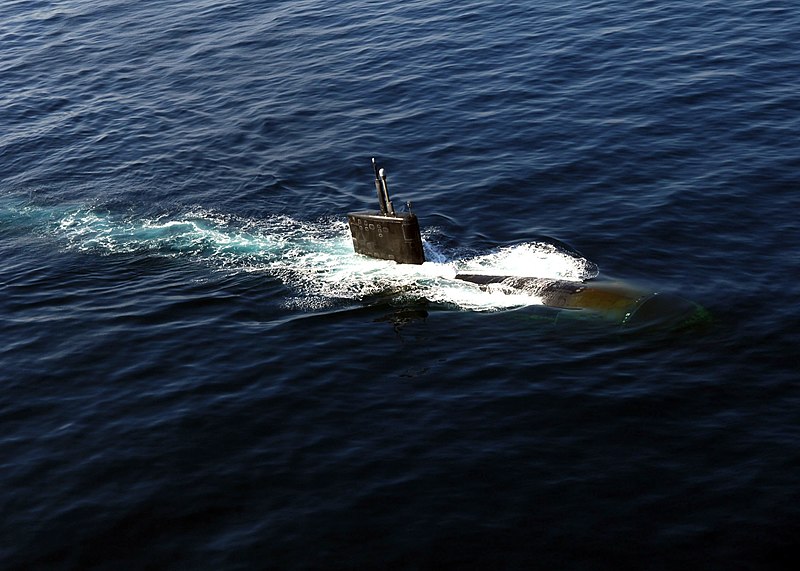
The United States is set to deploy a US Navy nuclear submarine to South Korea for the first time since the 1980s. The deployment comes as Washington looks to reinforce its commitment to protecting South Korea from a potential attack by North Korea.
During the summit between US President Joe Biden and South Korean President Yoon Suk-yeol, the two leaders issued a joint declaration that Washington will be deploying a US Navy nuclear-armed ballistic missile submarine to South Korea in a strong message to Pyongyang over its nuclear and missile programs.
This is the first time such a declaration was made for such a deployment since the 1980s. US SSBNs are known to rely on stealth and secrecy and rarely make public stops in foreign ports.
Washington has pledged to deploy more of its “strategic assets,” including aircraft carriers, submarines, and long-range bombers, to the region to deter North Korea as Pyongyang has continued to develop missiles that could hit targets from South Korea to the United States mainland.
The submarine deployment was also an effort to assure South Korea while quelling talks in Seoul of developing its own nuclear weapons. No other details were revealed about the expected submarine deployment, but the declaration said it was further proof of Washinton’s commitment to “further enhance the regular visibility of strategic assets to the Korean peninsula.”
A senior US official familiar with the matter said the visit would be part of more frequent trips to the region by US strategic assets. The official noted that there is no “vision for any regular stationing or basing of those assets and certainly not nuclear weapons” in South Korea.
Last week, Japan has already activated its missile interceptors and is prepared to shoot down any debris from a North Korean surveillance satellite should it fall over Japanese territory. Japanese defense minister Yasukazu Hamada made the announcement on Saturday, directing troops to prepare its PAC-3 surface-to-air missiles in southwestern Japan, including Okinawa and its nearby islands, in a region that is under the flight path of a North Korean rocket that will carry the nation’s first surveillance satellite.
Hamada also ordered the deployment of destroyers that are equipped with SM-3 ship-to-air missiles to coastal waters, according to the statement by the Japanese defense ministry.