


 US Justice Department Drops Prosecution of Ex-CIA Analyst Sue Mi Terry
  Netanyahu Rejects Preemptive Iran Strike Ahead of Israel Election
  Italy’s Meloni Warns US-Russia Diesel Deal Could Weaken Ukraine Sanctions
  US Supreme Court Denies Release of Anti-ICE Activist Kyle Wagner
  Zelenskiy Says Ukraine Received No Warning Before Russian Missile Attack
  US Condemns China Sanctions on Taiwan Allies Belize and Paraguay
  Trump Denies Russia and China Are Helping Iran in U.S. Conflict
  Elon Musk Donates $366 Million to 2026 US Midterms
  Jordan Bardella Antisemitism Allegations Threaten Le Pen’s Campaign
  MI5 Warns of Rising Iran, Russia Threats and AI Bioweapon Risks
  SpaceX Starlink Restrictions Disrupt Ukraine Military Operations
  US Senate Midterms 2026: Key Races That Could Flip Control
  Zelenskiy Seeks New US Talks to Revive Ukraine-Russia Peace Negotiations
  Container Ship Sinks in Strait of Hormuz as Iran Attacks Escalate
  Kim Jong Un Showcases ICBM Ahead of Possible Trump Meeting
  Most Americans Oppose Election Betting on Prediction Markets, Poll Finds


 Add as a preferred source on Google
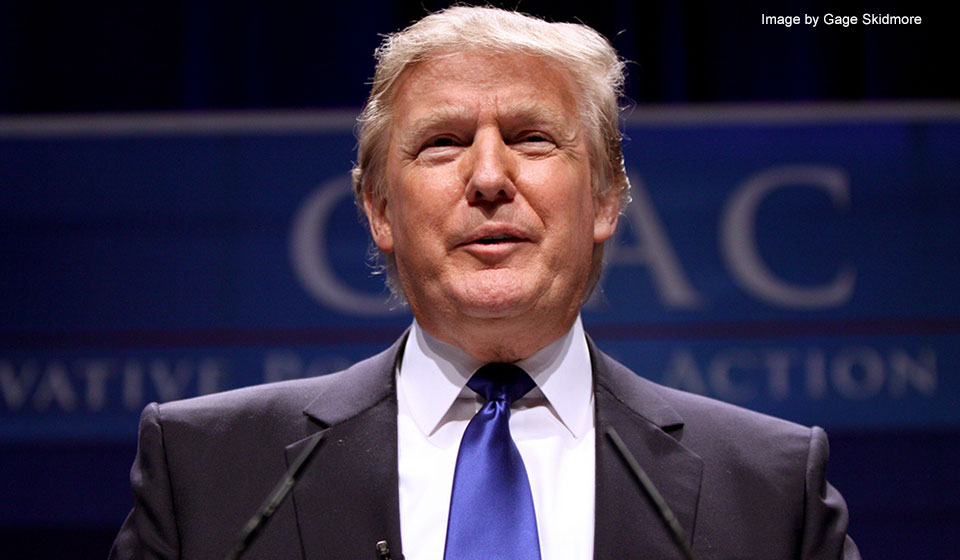
It’s debate season in the US presidential election race. After the chaos of the first debate, both Donald Trump and Joe Biden will be hoping to regain control of the media narrative at a crucial phase of the campaign.
Speculation about a possible “October surprise” is widespread. Today, the term refers to any news story that breaks late in an election cycle and has the potential to affect the outcome of the election. Yet its origins are firmly rooted in foreign policy. In particular, the phrase describes a sitting president’s alleged propensity to manipulate events to boost their electoral prospects.
From the fate of a trade deal with China to the authorisation of a COVID-19 vaccine, pundits are lining up to accuse the Trump administration of playing politics with issues of significant national interest.
But what impact have October surprises actually had on presidential races?
Iran hostage crisis
The initial use of the term referred to President Jimmy Carter’s handling of the Iranian hostage crisis in 1980. Back then, officials in the Reagan campaign grew concerned that Carter would manufacture a pre-election deal or authorise a headline-grabbing rescue operation to secure the release of 52 US citizens being held in Tehran.
Wary of the impact that this would have on his chances, Ronald Reagan’s advisers established an “October Surprise Group”, which sought to frame any possible move by the Carter administration as a cynical ploy for votes. Amid swirling rumours in the press, Carter would privately complain that he was “walking through a political minefield” when attempting to continue negotiations with Iran. In the end, Reagan won with a landslide.
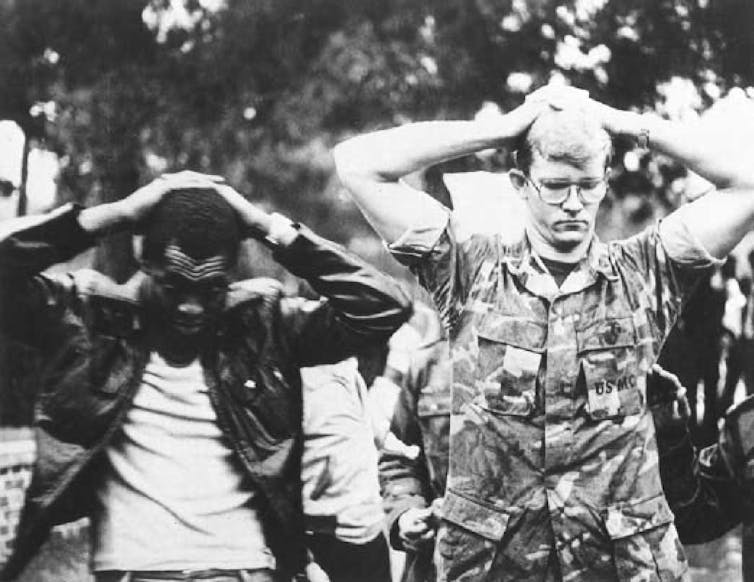
Two American hostages during the Iran hostage crisis in Tehran. Wikimedia Commons
Yet the phenomenon of a last-minute event influencing the election pre-dates the term. Similar accusations, for instance, were levelled against Lyndon Johnson after he announced a bombing halt over North Vietnam just days before the 1968 election.
Even though Johnson had pulled out of the race by that point, declassified documents reveal just how anxious the president was not to appear to be making decisions about war and peace in an attempt to swing votes to the Democratic candidate, Hubert Humphrey. “I would rather be stubborn and adamant,” he told advisers, than a “tricky, slick politician”.
Do they work?
So why all the fuss about October surprises? While voters tend to know little about foreign policy, and care about it even less, this is not always the case. If an issue is both sufficiently newsworthy and generates a clear contrast between the positions of each candidate, it can be enough to influence voting behaviour.
This is especially so during a war, where rising casualty rates can affect vote patterns and turnout rates. One study estimated that the approximately 10,000 US dead and wounded in Iraq by the November 2004 election may have cost George W Bush nearly 2% of the national popular vote and several states in his narrow re-election victory over John Kerry. Continuing popular dissatisfaction with the war went on to be a critical driver of Barack Obama’s victory four years later.
Other types of international crisis can also trigger a boost of public support for an incumbent as voters rally round the flag.
Even during peacetime, it’s not unreasonable to think that a significant last-minute development might tip the balance of a tight race. Carter certainly thought so during his doomed bid for re-election. More recently, the FBI’s decision on the eve of the 2016 election to reopen an investigation into Hillary Clinton’s use of a private email server triggered a potentially decisive swing in Trump’s favour, arguably sinking the Democratic candidate’s campaign.
The truth is that foreign policy represents more risk than reward on the campaign trail. The average size of a “rally effect” is small and largely out of the president’s control. The potential upside of using force overseas typically pales in comparison to the high political costs of failure, even for unpopular leaders who might otherwise be tempted to gamble for resurrection in the polls. No wonder, then, that evidence of incumbent presidents actually planning for a last-minute diversion is patchy at best.
Decisions delayed
This isn’t all just hot air. Irrespective of whether or not an incumbent really is plotting an October surprise, the speculation alone can be of great consequence.
Knowing that critics stand ready to impugn the motives behind any significant decision on the eve of an election, incumbents often bend over backwards to avoid such accusations. As I’ve written elsewhere, this often leads to critical decisions being delayed or adapted in ways that reflect the exigencies of the political calendar. From troop commitments overseas to international agreements, the military and diplomatic value of critical decisions are all too often sacrificed at the altar of electoral expediency.
More troubling still, candidates have been accused of resorting to underhand tactics in attempts to hamstring an incumbent’s ability to launch a bold action at the eleventh hour. It was precisely the Reagan campaign’s fear of an October surprise, for instance, that lay behind an alleged deal struck with Iranian officials to delay the release of the hostages until the Republican candidate’s inauguration in 1981 in return for a supply of arms.
As the US approaches election day on November 3, expect to hear more cries of foul play and political gimmickry, as unease grows at what the final throes of the campaign might hold in store. As Lyndon Johnson put it several decades ago: “The closer you get to the elections, the more troubles you have.”








