


 Novartis M&A Strategy Faces Investor Scrutiny After Drug Setbacks
  Bitcoin Outflows From Binance Hit Three-Year High as Whales Accumulate
  Fairshake Backs 32 Pro-Crypto House Candidates
  Cardano Price Surges 10% as ADA Targets $0.30
  Robinhood Buys $25 Million in Bitcoin for Corporate Treasury
  US-Backed Pediatric HIV Treatment Drops After Foreign Aid Changes, Study Finds
  SK Biopharmaceuticals Secures Global Rights to Biohaven Epilepsy Drug Opakalim
  Novo Nordisk Raises 2025 Outlook Despite Wegovy Pill Miss and CagriSema Setback
  HUTCHMED, AstraZeneca Seek FDA Approval for Lung Cancer Combo
  Moderna Short Sellers Hit With $4.8 Billion Loss as Stock Soars
  New Mexico Measles Outbreak Cost Reached $5.4 Million, Study Finds
  China Shuts 670 Banks as Bitcoin Eyes Financial Risks
  Venezuela Earthquake Health Risks Rise as Disease Monitoring Intensifies
  Novo Nordisk Eyes Turnaround as Oral Wegovy Challenges Eli Lilly in Weight-Loss Drug Race
  3 clinical-grade skincare creams you really shouldn’t buy online
  U.S. Government Moves Over $100M in Bitcoin and BNB


 Add as a preferred source on Google

Attention deficit hyperactivity disorder (ADHD) is quite common. It affects about one in 20 children and is three or four times more common in boys than in girls. Children with ADHD, which is characterised by inattention, hyperactivity and impulsivity, are more likely to drop out of school. Fortunately, drugs to treat the condition work well for 60-80% of children who take them. But that leaves 20-40% of children who have a poor response to the drugs or who suffer from side effects.
Some studies have shown that omega-3 fish oil may help with ADHD symptoms. What’s more, they’re safe and well-tolerated. However, the results of these studies have been mixed – some children get better, others get worse. We wanted to know whether these results depended on whether or not the children had enough omega-3 in their body to begin with.
Omega-3 fatty acids, such as docosahexaenoic acid (DHA) and eicosapentaenoic acid (EPA), are important for our brain, body, immune system and heart. We can only get them from food, such as oily fish, spinach and nuts.
Previous studies have found that children with ADHD eat less omega-3-containing food and have less omega-3 in their bodies than children without ADHD, so they are also more likely to show symptoms indicating a lack of omega-3, such as eczema, brittle nails, and dry and scaly skin. But in previous studies, omega-3 fatty acids were given to children with ADHD without checking if they were deficient in omega-3 in the first place.
In our study, published in the journal Translational Psychiatry, we examined 92 children, aged six to 18, diagnosed with ADHD. Half were randomly assigned to a group taking omega-3, EPA. The other half (the control group) were given a placebo. The trial lasted 12 weeks.
We measured the children’s progress with a continuous performance test (CPT), an objective cognitive assessment of attention, vigilance and impulsivity at the beginning and at the end of the trial. We found that children who were deficient in omega-3, measured in the blood, became more attentive and vigilant at the end of the 12 weeks when taking EPA. The difference was statistically significant, that is, unlikely to be the result of chance.
In contrast, we found that children in the EPA group with little or no omega-3 deficiency had a worsening in some ADHD symptoms, especially impulsivity. This further suggests that you can have “too much of a good thing”, and that an adequate amount of omega-3 is needed for optimal results.
Currently, there is no recommended dosage for pure EPA, but a panel of experts suggested that the patients who prefer omega-3 supplementation over stimulants (such as Ritalin) should take a combination of DHA and EPA at doses greater than or equal to 750mg a day for at least 12 weeks.
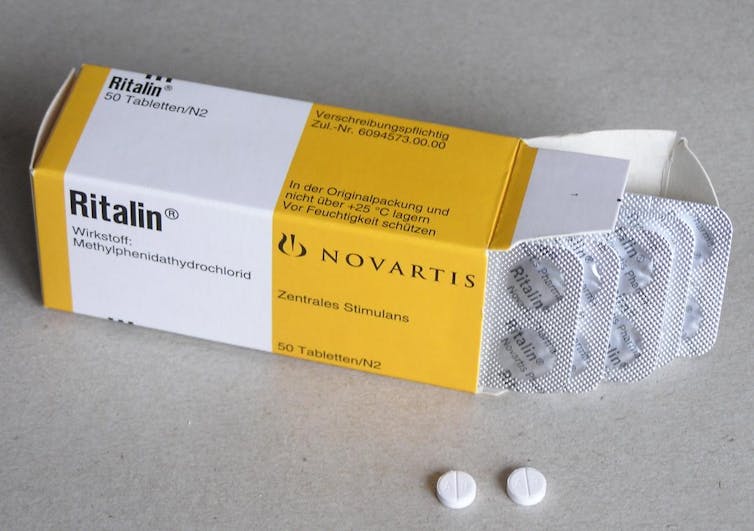
Drugs that treat ADHD are effective in 60-80% of children. Wikimedia, CC BY
First of its kind
Our study is the first to use the concept of personalised medicine (also known as “precision medicine”) applied to nutritional studies. It is also the first study to point out the omega-3 may not provide benefits for all children with ADHD, and in some cases, may even be detrimental. For this reason, children with ADHD should only take a supplement with omega-3 under the supervision of their doctors. And children shouldn’t switch from their medication to fish oil supplements, especially if they are doing well on the medication.
Of course, eating more oily fish should be a priority for these children, too.







