


 Tencent Shares Fall as $5 Billion AI Bond Sale Weighed
  TSMC Profit Set to Surge 65% as AI Chip Demand Drives Record Earnings
  Amazon in Talks to Acquire AI Startup Decart for $7 Billion
  Moonshot AI Executives Seek Settlement Ahead of Hong Kong IPO
  Oracle Uses Trucked Natural Gas to Power AI Data Centers Amid Pipeline Delays
  Elon Musk Accuses Indian Telecom Giants of Blocking Starlink Launch
  Meta Launches Muse Wonder AI Models, Shares Rise 3.7%
  TSMC Q3 Revenue Beats Estimates as AI Chip Demand Surges
  Apple Supplier Luxshare Sees Limited Impact From US Patent Probe
  Arthur Hayes Announces FLOP Testnet Launch Within Weeks
  Apple Cuts iPhone 18 Pro Production Orders Amid Weak Demand
  Samsung, SK Hynix Shares Plunge as China Chip Competition Grows
  US Suspends Microsoft, Adobe From Green Card Program
  Apple Names Steve Smith M&A Chief in Leadership Shakeup
  Zcash Plans Quantum-Resistant Security Upgrade for January
  Yandex Data Center Hit by Drone Strike as Russia-Ukraine Cyber Infrastructure Attacks Escalate
  Samsung, SK Hynix Shares Fall as China's CXMT Advances DRAM Technology


 Add as a preferred source on Google
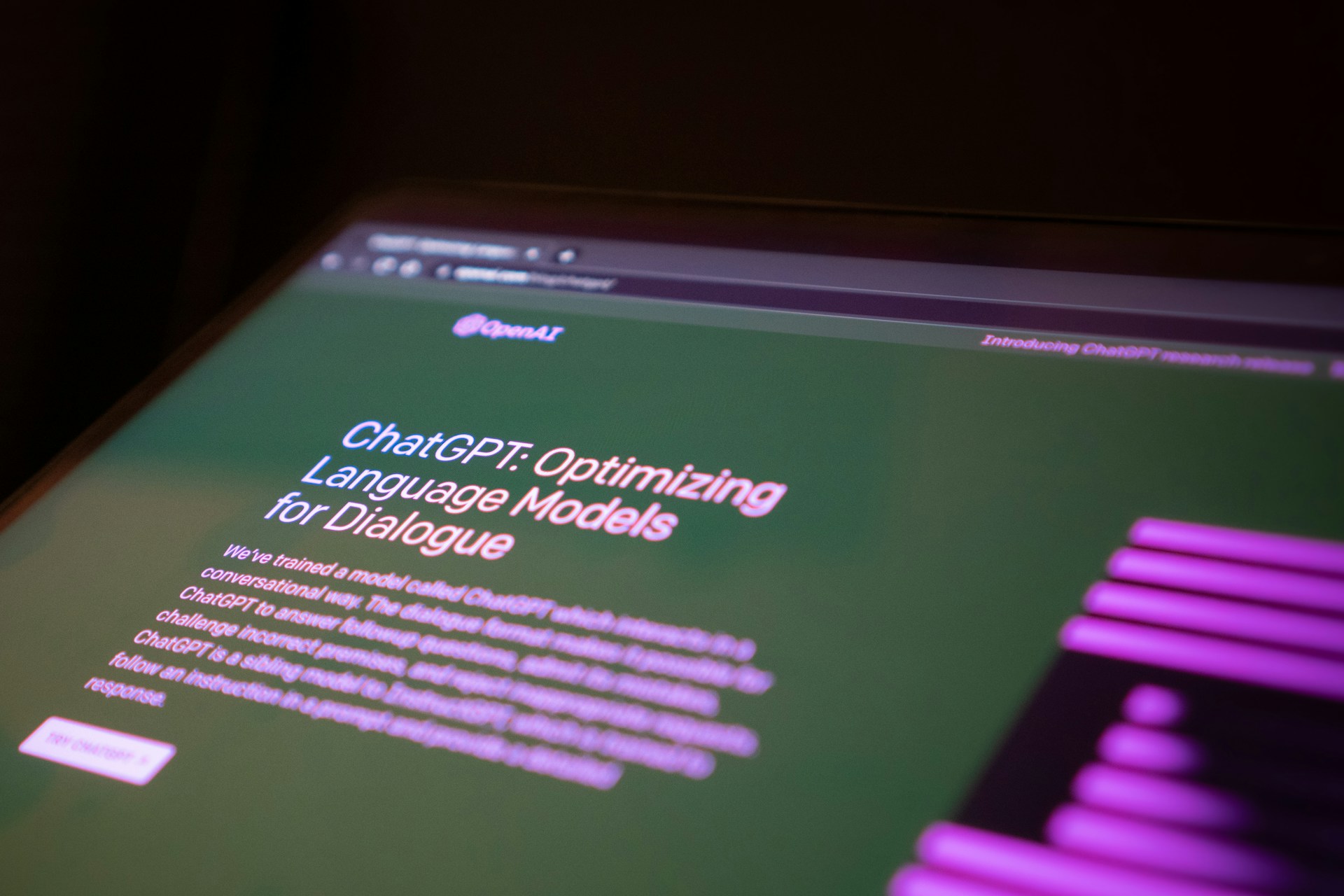
Already, OpenAI has compelled significant players in the technology sector, including Google, to adopt an unprecedented wave of AI functionalities. It appears that the developer of ChatGPT may now launch a direct competition with Google with a search engine.
As reported by The Indian Express, OpenAI is developing a "web search product," according to a source with knowledge of the plans. Microsoft's Bing would provide some functionality support for this service, as stated by the source.
Whether this would be a distinct service from ChatGPT is still being determined. To clarify, ChatGPT does provide a Browse with Bing functionality that is accessible to users with a ChatGPT Plus subscription.
OpenAI Eyes Search Market, Aiming to Dethrone Google with AI-Driven Platform
This would represent OpenAI's most direct challenge to Google to date if confirmed. Search engine optimization (SEO) has long been Google's primary source of revenue (Google's cash cow).
However, the most significant inquiry is whether an OpenAI search product can outperform Google and potentially even displace the company. Lately, Google has faced censure regarding the caliber of its results, which it attributes to websites employing SEO and AI-generated content of inferior quality.
This critique has received some support from a recent study that examined product-related searches. If OpenAI's web search product is to have any chance of surpassing Google, it must circumvent these and additional hazards.
Additionally, this would not be the initial search engine powered by AI. The information cites the Perplexity AI service as a recent example. Perplexity enables users to submit search queries, after which the service generates text-based responses and relevant links.
The announcement follows Google's recent declaration that its Bard AI assistant would be renamed Gemini. The company also provides a Google One AI Premium plan for $20 per month, granting users access to the Gemini Advanced service and 2TB of storage.
AI Developed By Google Has A New Name: The Gemini
Google's reputation has earned it the moniker "a million similar products with perplexingly different names that appear to have nothing in common." (May I intrigue you with a messaging application?) However, only one appellation will suffice regarding its future AI endeavors: Gemini.
On Thursday, according to CNBC, the organization disclosed its intention to redesign its Bard chatbot as Gemini, introduce an exclusive Gemini application for Android, and incorporate all Duet AI functionalities in Google Workspace under the Gemini brand. It was also disclosed that the public release of Gemini Ultra 1.0, the most extensive and powerful iteration of Google's large language model, is imminent.
Gemini's mobile applications will likely be where most users first find the new utility. By installing the latest application on an Android device, Gemini can be configured as the user's default assistant, replacing Google Assistant as the UI that appears in response to "Hey Google" or long-pressing the home button. Although Google has not entirely abandoned Assistant, the company has been deprioritizing Assistant for some time and believes Gemini to be the future.
"I think it's a super important first step towards building a true AI assistant," Sissie Hsiao said. "One that is conversational, it's multimodal, and it's more helpful than ever before."
Although there is currently no specialized Gemini application for iOS, and it is impossible to configure a non-Siri assistant as the default, all AI functionalities can be accessed through the Google app. To further illustrate the significance that Google places on Gemini, a toggle will be present at the upper section of the application, allowing users to transition between Search and Gemini.
Throughout Google's existence, Search has been the most essential product; there are indications that Gemini may be just as significant. (Also, Google's in-search AI is presently known as Search Generative Experience; however, likely, this designation will eventually be changed to Gemini.)
The remaining modifications to Gemini primarily concern branding. Although Google is removing the Bard moniker from its chatbot, its functionality will remain unchanged. The same holds for all the artificial intelligence (AI) functionalities integrated into Google Workspace applications, including Gmail and Docs, formerly called "Duet AI," but are now alternatively dubbed Gemini. These are the functionalities that facilitate the completion of work-related duties such as organizing a spreadsheet and composing emails.
Most consumers will continue to utilize Gemini Pro, the standard configuration of the Gemini model. An active subscription to Gemini Advanced is required to utilize Gemini Ultra, the most potent iteration of the model. This subscription is available as part of the new Google One AI Premium plan, which costs $20 monthly.
In addition to 2TB of Google Drive storage and all the other features of the Google One subscription, the subscription costs those users $10 per month, as framed by Google. The cost is equivalent to ChatGPT Plus and comparable products for all users. A high-end AI assistant named Gemini is estimated to be available for $20 per month. These are the functionalities that facilitate the completion of work-related duties such as organizing a spreadsheet and composing emails.
Hsiao asserts that Gemini Ultra "establishes the standard across an extensive array of benchmarks encompassing text, image, audio, and video" for $20 per month. The Ultra model is optimized for complex tasks such as logical reasoning, retaining more context, and holding extended conversations.
Photo: Jonathan Kemper/Unsplash







