
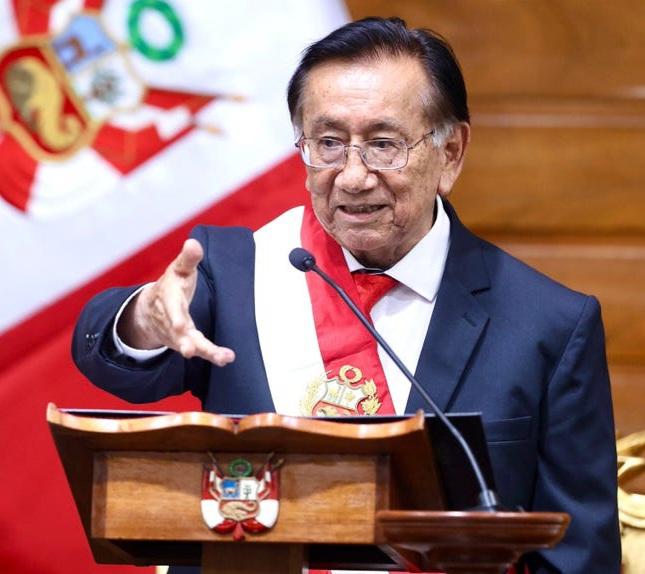
Peruvian lawmakers have elected veteran left-wing legislator Jose Balcazar as the country’s new interim president, marking Peru’s eighth president in just eight years and underscoring the nation’s ongoing political instability. The 83-year-old replaces Jose Jeri, who was removed from office by Congress after only four months following a scandal involving undisclosed meetings with Chinese businessman Zhihua Yang.
Balcazar secured the presidency in a 64-46 congressional vote over center-right lawmaker Maria del Carmen Alva after no candidate achieved a majority in the first round. He will also serve as head of Congress and remain in office until July 28, when the winner of Peru’s April 12 general elections is sworn in. A runoff vote is expected in June.
During his swearing-in ceremony, Balcazar pledged to defend Peru’s sovereignty, democratic institutions, and the moral integrity of the Republic. His primary responsibility will be to oversee credible and transparent elections while maintaining political stability in a country grappling with tensions between the executive branch and Congress, as well as a fragmented party system.
Peru’s economy, heavily reliant on mining and ranking as the world’s third-largest copper producer, has remained resilient despite frequent leadership changes. The country recorded solid economic growth and relatively low inflation last year compared to regional peers. However, investors and political observers are closely monitoring the caretaker government for signs of renewed turbulence.
Analysts suggest that further political disruption before July would deepen concerns about governance in Peru. Still, some former officials argue that markets are unlikely to react negatively, as the transition is temporary and elections are already scheduled.
Jeri’s abrupt removal follows earlier political upheaval that saw former President Dina Boluarte ousted amid corruption scandals and rising public frustration over crime. As Peru approaches its April presidential election, Balcazar’s leadership will be critical in restoring confidence and ensuring a smooth democratic transition.


