


 Fed’s Williams Sees One More Rate Hike in 2026, None in 2027
  Best Gold Stocks to Buy Now: AABB, GOLD, GDX
  China Bank Lending Rebounds in September, Beats Forecasts
  S&P 500 Rally Masks Losses for Over 40% of Stocks in 2026
  RBA Says ASX Still Falls Short on Governance and Risk Controls
  Oil Prices Mixed as Russia Diesel Deal and Houthi Attacks Raise Supply Concerns
  Italy’s Meloni Warns US-Russia Diesel Deal Could Weaken Ukraine Sanctions
  European Stocks Rise as Oil Prices Fall Ahead of US CPI
  European Auto Stocks Rise as EU-China Trade Deal Targets Hybrid Imports


 Add as a preferred source on Google
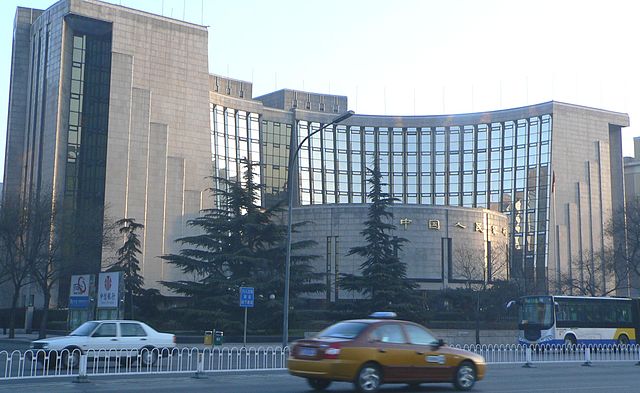
China's central bank announced on Monday it would cut banks' reserve requirement ratio, allowing banks to set aside fewer deposits which in turn encourages them to lend more. The unexpected move came one day ahead of the scheduled release of the official purchasing managers index, and was yet another sign that Beijing is committed to monetary easing to revive the economy. It shows that the central bank is less worried about the yuan exchange rate weakening than it was a few weeks ago.
"The move suggested that the PBOC is less concerned about capital outflow and the yuan. Monetary easing is obviously continuing as the economy is still weak." said Mark Williams, chief Asia economist with Capital Economics in London.
PMI is a key leading indicator of economic resilience in China. Data released earlier today showed Chinese manufacturing sector activity continues to deteriorate, as reflected by both the official and Caixin PMI reports. China Feb Caixin manufacturing PMI came in at 48.00 vs 48.4 expected and 48.4 last. While the official China manufacturing PMI fell from 49.4 in Jan to 49.0 in Feb, the weakest reading in more than four years. Overall, the subdued PMIs continue to signal weak underlying growth in Q1 and onwards and suggest continued support from the authorities.
"Looking ahead, we see continued monetary easing to support the economy and lending. Following yesterday's RRR cut by the PBoC, we now add another 50bp RRR cut (a total of 100bp), and continue to look for two rate cuts (25bp each in Q1 and Q2 respectively) in H1 2016", says Barclays in a research note.
China's policymakers had made it clear that they would take necessary steps to support growth. The central bank said in a statement that the reserve ratio cut was designed to keep sufficient liquidity in the banking system, to guide "stable and appropriate growth in credit", and to create an accommodative environment for China's supply-side reforms. Market will be keenly watching for the major economic targets for 2016, which are due to be unveiled at the National People's Congress' annual full session this Saturday.
Markets cheered the PBoC's move, MSCI's broadest index of Asia-Pacific shares outside Japan edged up about 0.5 percent. The Shanghai Composite Index erased early losses and added 0.2 percent, while the CSI300 index edged up 0.4 percent. The yuan firmed at the open on Tuesday, spot market opened at 6.5432 per dollar and was trading at 6.5440 in early trade. The offshore yuan was trading -0.08 percent away from the onshore spot at 6.5492 per dollar, firmer than the previous day's unofficial close of 6.5518.

- News

- Economy

- Central Banks
- Investing
- Research
- Roundups
- Digital Currency
- Insights
- Technical Analysis
- Technology
- Business
- Law
- Health
- Nature
- Fintech
- Science
- Topic
- Opinions
- ©Econometrics LLC . All Rights Reserved.
Poor China's PMIs suggests monetary easing from PBoC likely to continue
Tuesday, March 1, 2016 10:40 AM UTC
Editor's Picks



- Market Data
Most Popular




