


 Gold Prices Fall Amid Rate Jitters; Copper Steady as China Stimulus Eyed
  Gaza Olive Harvest Collapses as War Destroys Farmland
  S&P 500 Futures Rise Ahead of US Inflation Data and Bank Earnings
  Trump Defends Russian Diesel Deal Amid US Sanctions Backlash
  Asian Stocks Plunge as AI Chip Selloff Hits South Korea and Japan
  Fed's Hammack Urges Faster Rate Hikes to Fight Inflation
  RBA Signals More Rate Hikes as Inflation Risks Rise
  Best Gold Stocks to Buy Now: AABB, GOLD, GDX


 Add as a preferred source on Google
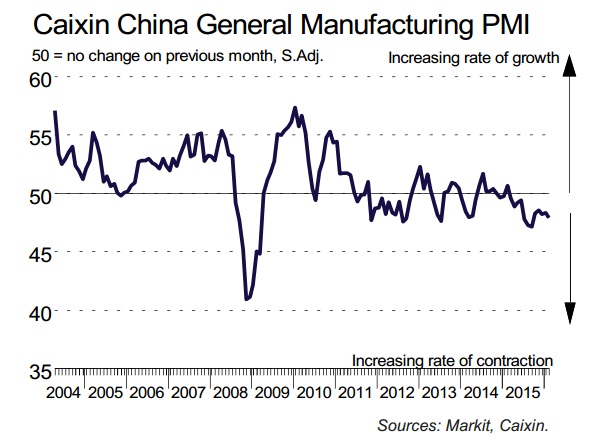
According to latest report released by Caixin, in collaboration with Markit Economics, show Chinese employment have started bleeding at fastest pace since the great recession of 2008/09.
Key highlights from the report
- Headline PMI declined to 48 in February from January's 48.4 mark. This is worst reading in five months.
- Operating conditions deteriorates for Chinese goods producers. Operating conditions have deteriorated steadily and in every month for last one year. Output and new orders declined at faster rate than in January.
- Lower production has led to the depletion of finished products.
- Staffing levels saw fastest pace of decline since 2009. Cost cutting initiatives are largely responsible for decrease in employment.
- Output prices have continued to decline mainly due to lower input cost coupled with lower demand.
According to Dr. He Fan, chief economist at Markit
"The Caixin China General Manufacturing PMI for February is 48, down 0.4 points from the previous month. The index readings for all key categories including output, new orders and employment signaled that conditions worsened, in line with signs that the economy's road to stability remains bumpy. The government needs to press ahead with reforms, while adopting moderate stimulus policies and strengthening support of the economy in other ways to prevent it from falling off a cliff."
Caixin report clearly points out at prevalent weakness in Chinese economy and any recovery could still be quite far away as it yet to reach stabilization.
Other two official measures painted similar bleak picture
- Official NBS manufacturing PMI dropped to 49 from 49.4 prior and non-manufacturing PMI dropped to 52.7 in February from 53.5 in January.
China's benchmark stock index, however is up more than 1%, trading at 2715 and Yuan is at 6.541 per Dollar.







