


 BlackRock’s Rick Rieder Favors Bonds Over Stocks as Treasury Yields Surge
  Asian Currencies Weaken as Dollar, Oil Prices Rise
  Yen Sinks as BOJ Rate Hike Fails to Impress Markets
  Fed Unveils Stablecoin Rules Under GENIUS Act
  Oil Prices Jump Nearly 3% as Iran Holds Firm on Hormuz Conditions
  Fed Unveils Stablecoin Rules Under GENIUS Act
  XRP Price Targets $1.70 as Bullish Momentum Builds
  Japan Factory Output Unexpectedly Falls 1.7% in August
  BOJ Raises Interest Rate to 31-Year High as Yen Weakens
  U.S. Stock Futures Fall as Iran, Oil and AI Risks Rattle Markets
  RBA Hikes Interest Rate to 4.60% as Inflation Risks Rise
  Japan Warns Markets Over Yen Weakness
  Central Banks Could Buy 20,000 Tonnes of Gold: BofA


 Add as a preferred source on Google
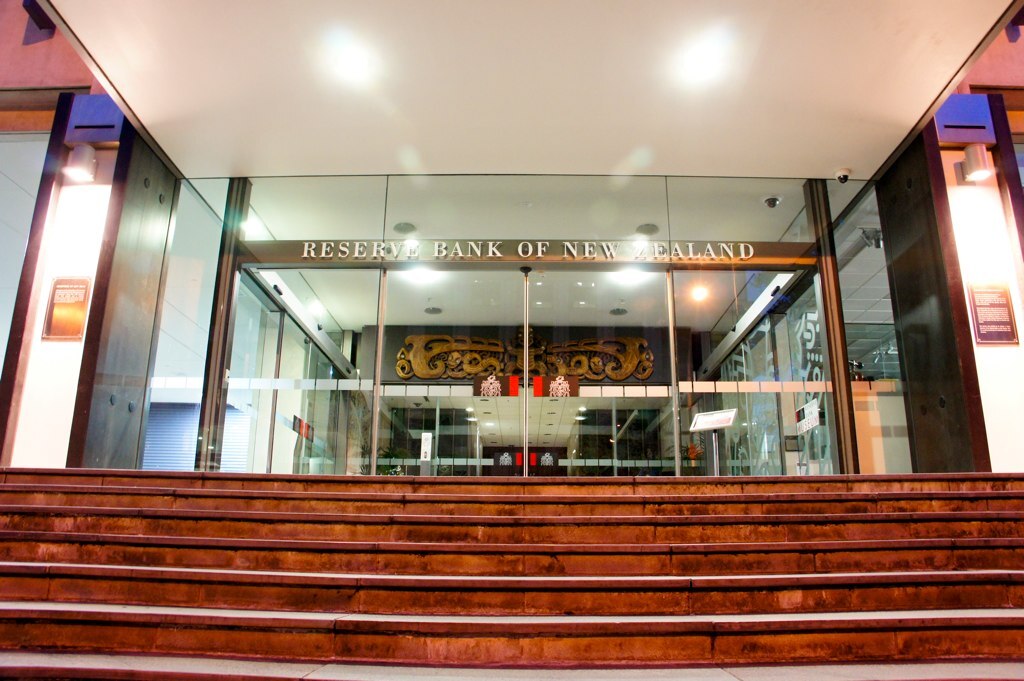
New Zealand’s central bank has indicated that the next move in interest rates is likely to be upward, although economic uncertainty continues to cloud the timing. Karen Silk, Assistant Governor of the Reserve Bank of New Zealand (RBNZ), said in a Reuters interview that policymakers believe the easing cycle has likely ended, with future adjustments to the Official Cash Rate (OCR) expected to trend higher.
The RBNZ held its benchmark OCR steady at 2.25% on Wednesday, reaffirming that monetary policy will remain accommodative to support New Zealand’s economic recovery. However, the central bank’s updated OCR projections suggest a possible rate hike by the end of the year. Silk emphasized that while the baseline scenario points to higher interest rates, risks remain balanced on both sides. Weak consumer spending poses downside risks, while persistent or “sticky” inflation could drive rates upward sooner than anticipated.
Silk clarified that the RBNZ is not attempting to counter market expectations for rate hikes. Instead, she described the policy outlook as a realistic reflection of current economic conditions. Policymakers will closely monitor economic activity and inflation data before making any decisions. Even with a modest rate increase, Silk noted that borrowing costs would still sit at the lower end of what the central bank considers the neutral interest rate range.
Core inflation is projected to ease toward the midpoint of the RBNZ’s 1%–3% target band, despite ongoing economic growth. According to Silk, spare capacity within the economy allows for above-potential growth without immediately reigniting inflationary pressure.
The central bank also addressed the introduction of monthly Consumer Price Index (CPI) data, which has prompted a shift from seven to eight policy meetings annually starting next year. While monthly inflation indicators may be volatile, they will complement broader economic data used to guide future monetary policy decisions.
With inflation trends and consumer demand under scrutiny, the outlook for New Zealand interest rates remains data-dependent, keeping markets alert for potential tightening ahead.







