


 Fed’s Logan Signals 50 Basis Points More in Rate Hikes
  Bitcoin Price Falls Below $83K as Liquidations Hit $697M
  BlackRock’s Rick Rieder Favors Bonds Over Stocks as Treasury Yields Surge
  DogecoinVM Makes DOGE Transactions 300x Faster
  Sector Spotlight: Data Availability and Storage Lead 24-Hour Market Gains
  Zcash Mining Profits Surge as Liquidity Risks Grow
  Yen in Focus as BOJ, Fed Rate Hikes Reshape Currency Markets
  Fed Unveils Stablecoin Rules Under GENIUS Act
  Trump Demands Powell Resign Over Fed Renovation Cost Overruns
  Solana User Growth Jumps 33%, Outpacing Ethereum and Chainlink
  RBI Raises Repo Rate to 5.50% in Hawkish Shift on Inflation Risks
  Ethereum Price Drops Below $2,600 as Long Liquidations Hit 4-Month High


 Add as a preferred source on Google
We reckon the monetary policy divergence should be the major factor in the H2 of the year for a lower AUDUSD in the long run and interim upswings in the short run as the today’s RBA cash rates likely to remain unchanged, whereas the Fed prepares to stiffen again.
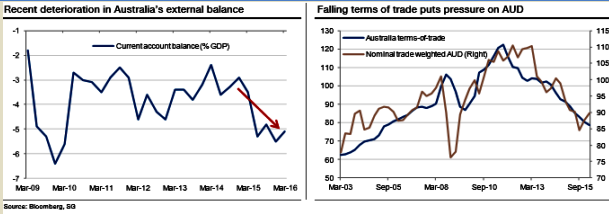
The fundamental backdrop for the Australian dollar remains challenging, though the trade-weighted AUD has fallen significantly from its highs in early 2012.
The Australian economy is gradually transitioning away from the natural resource sector, aided by low-interest rates and a weaker currency, but the current account imbalance has widened in recent quarters, non-mining CapEx growth has been elusive.
The Australian terms of trade are still falling, and thus the fundamental path of least resistance for AUD is for further depreciation (see above graph). This, plus the persistent and surprising disinflationary pressures in Australia, has kept the RBA on an easing bias, with one rate cut expected in H2 16.
The persistent weakness in nominal GDP growth has had negative consequences for government revenues, and fiscal policy should remain constrained.
While the RBA is firmly on a dovish policy setting, FX market implied volatility is elevated, Fed policy normalization remains on track and risks to the Chinese growth outlook abound (see above graph).
Australian building approvals have been massively reduced to -5.2% from the previous flash at 3.3%, while retail sales and trade balance are the data releases for the day that could add volatility to the AUD crosses in conjunction with RBA’s rate statements.
These leading economic indicators divulge economic health and how the business adopts quickly to market conditions, and their purchasing managers hold perhaps the most current and relevant insight into the company's view of the economy.
Going forward, over the longer-term, we expect AU growth to remain subpar and AUD to drift lower. There are a few key things to watch in 2016. Governor Stevens retires in Sept 2016 while the federal election results must be adding volatility to the AUD crosses. We could foresee the AUDUSD to head southwards at 0.72-0.73 by Q4 of the year.







