


 Vance Demands Iran Cut Nuclear Enrichment to End War
  ISIS Attack Near Kirkuk Kills Iraqi Policeman After US Withdrawal
  Mexico Seeks US Evidence After Border Gunfire Claim
  North Korea Slams US Taiwan Arms Sales, Reaffirms Russia Support
  France Student Protests Intensify Nationwide
  Trump Plans Diesel Tax Relief as Fuel Prices Hit Record Highs
  Trump Opens Tax-Exempt Dyed Diesel Access as Fuel Prices Surge
  US DOT Ends Airline Privacy Review Without Enforcement
  India-US Trade Deal Talks Hit Plateau, Sitharaman Says
  Cuba Says US Contacts Continue but Formal Talks Remain Stalled
  Russian Bombs Kill Six, Injure Nearly 60 in Kharkiv
  Iran Tanker Attacks Surge as Hormuz Oil Flows Near Prewar Levels
  Lula Weighs Alckmin as Finance Minister to Boost Fiscal Credibility
  OpenAI, Anthropic Back Mandatory AI Breach Reporting in Australia
  Trump Envoy Meets Sudan Army Chief in Egypt
  Fairshake Backs 32 Pro-Crypto House Candidates
  Takaichi Pledges to Control Japan Bond Issuance


 Add as a preferred source on Google
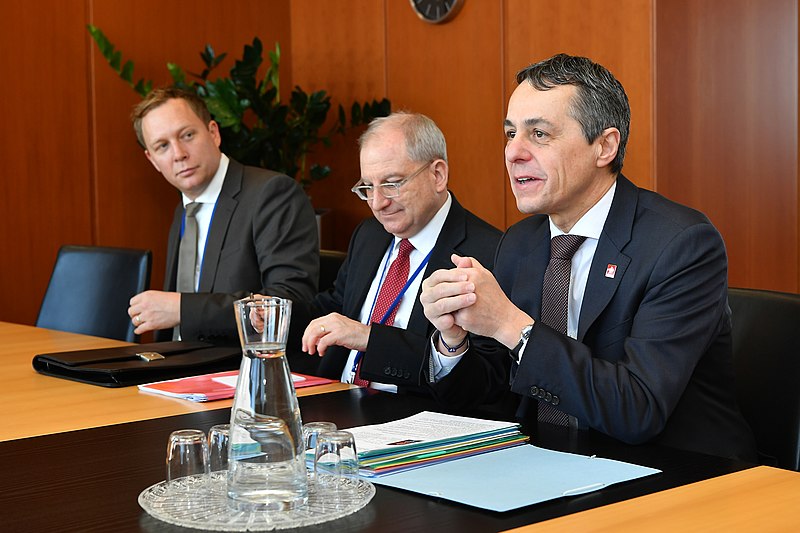
The West and many countries have sought to pressure Russia for its invasion of Ukraine through sanctions and seizing of its assets. Switzerland responded to Kyiv’s call to make use of seized Russian assets for Ukraine’s reconstruction.
Reuters reports that Switzerland has weighed in on Ukraine’s calls to use the seized Russian assets for Ukraine’s reconstruction. Ukrainian Prime Minister Denys Shmyhal made the call during a two-day recovery conference, saying that the $300 to $500 billion of assets frozen in the United States, the European Union, and the United Kingdom would help rebuild the schools, hospitals, and homes in Ukraine.
Shmyhal explained in a news conference that such a move would improve global security by deterring unprovoked aggression.
However, Switzerland has resisted the notion, amidst its report back in May that it has frozen $6.50 billion of Russian assets in the country. Switzerland, which has embraced the EU sanctions on Russia, is known to be a popular destination for Russian elites and has been a place for the elites to store their wealth.
“According to the rules we have in the vast majority of democracies…we can freeze assets, we can freeze in order to clarify where these assets are from,” said Swiss President Ignazio Cassis.
“Now we can take a decision which is perfect for Ukraine but we create the possibility to take the same decision in many other possibilities and…give much more power to the state and away from the citizen,” said Cassis.
Previously, Russian foreign minister Sergey Lavrov criticized France for releasing details of the call between French President Emmanuel Macron and Russian leader Vladimir Putin days before Russia invaded Ukraine in February. Lavrov said the release of the details of the call between the two leaders was a breach of “diplomatic etiquette.”
This comes as the broadcaster France 2 aired a documentary that revealed the details of a confidential call between Macron and Putin.
In the conversation, which saw Putin apparently preparing for an ice hockey game, the Russian leader also described the Maidan protests in 2014 that led to pro-Western leaders getting elected in Ukraine as a “bloody coup.”
Putin also accused Ukrainian President Volodymyr Zelenskyy of refusing to engage with pro-Russian separatists.
In the conversation, Macron appeared to be evidently frustrated, telling Putin that he does not know where his lawyer learned law as he criticized Russian views.







