


 US, EU Push for Action Against Asia’s Excess Factory Capacity
  Pakistan Declares Emergency in Khyber Pakhtunkhwa, Suspends Imran Khan’s PTI Government
  Houthis Warn Saudi Airports After Deadly Riyadh Attack
  Brazil Election: Lula and Bolsonaro Rally Ahead of October 25 Runoff
  Zelenskiy Slams US-Russia Diesel Deal as Funding War
  North Korea Fires Ballistic Missiles as Tensions With South Korea Escalate
  Flydubai Co-Pilot Planned Suicide Attack on Israel Airport, UAE Says
  Yandex Data Center Hit by Drone Strike as Russia-Ukraine Cyber Infrastructure Attacks Escalate
  Trump Announces Russia-Ukraine Energy Ceasefire Amid U.S. Pressure on Kyiv
  Mahmoud Abbas Postpones Palestinian Elections to September 2027
  Trump Calls for Zelenskyy Replacement Amid Russian Diesel Deal
  European Auto Stocks Rise as EU-China Trade Deal Targets Hybrid Imports
  Venezuela’s Machado Calls for Elections by July 2027
  Trump Announces Russia-Ukraine Energy Ceasefire as Zelenskiy Awaits Details
  RFK Jr. Launches Nationwide Vaccine Safety Review
  Trump Cancels Alabama Football Trip as Hurricane Isaias Approaches
  Panama Declares Emergency After 7.7 Earthquake Triggers 200 Aftershocks


 Add as a preferred source on Google
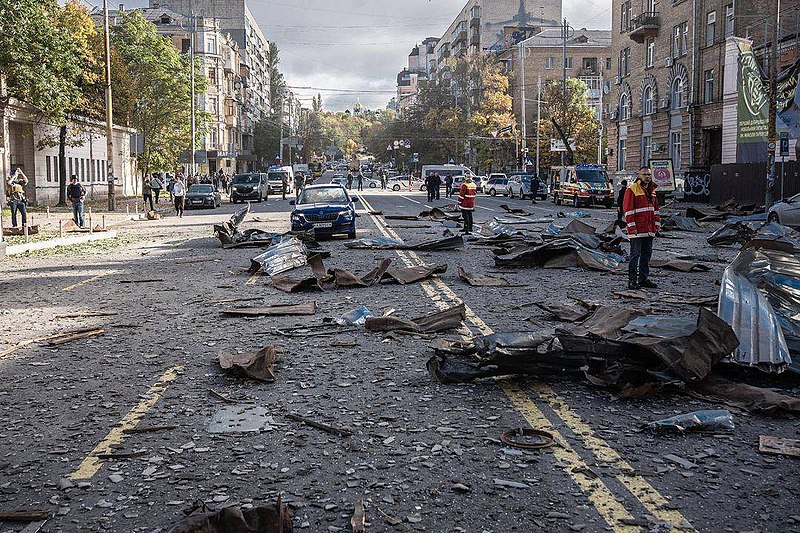
The widespread bombardments of civilian targets in Ukraine by Russia were met with international condemnation. The leaders of the Bucharest Nine group of countries, including North Macedonia and Montenegro, said the widespread Russian strikes on Ukrainian civilian targets are equal to war crimes.
In a joint statement Tuesday, the leaders of the Bucharest Nine countries: Bulgaria, the Czech Republic, Estonia, Hungary, Latvia, Lithuania, Poland, Romania, Slovakia, along with North Macedonia and Montenegro condemned the bombardments by Russian forces on Ukrainian civilians.
The leaders of the 11 countries said the widespread bombardments are equal to war crimes under international law.
“We recall that war crimes against humanity are not subject to any statute of limitations and are covered by the jurisdiction of courts all over the world,” said the statement. “On behalf of our states, we demand that Russia immediately stop attacking civilian targets. We will not cease our efforts to bring to court persons responsible for today’s crimes.”
Moscow has denied deliberately attacking civilians since it invaded Ukraine back in February.
“The presidents consider the threat by Russia to use nuclear weapons as unacceptable and reaffirm their commitment to ensuring their collective security,” said the statement released by the office of Bulgarian President Rumen Radev.
On the same day, Ukrainian President Volodymyr Zelenskyy appealed to the G7 countries for more air defense capabilities to be able to push back against Russia’s air strikes and support for his initiative for an international observer mission on the border Ukraine shares with Belarus.
During the virtual meeting with the G7, Zelenskyy called for tougher sanctions on Russia and again ruled out having talks with Russian leader Vladimir Putin. Zelenskyy thanked German Chancellor Olaf Scholz and US President Joe Biden for speeding up the deliveries of air defense systems.
Zelenskyy also said that Ukraine has no plans to attack Russian ally Belarus but that Kyiv wants to make sure that no threat is posed by Belarus.
Zelenskyy’s initiative follows Belarus’ announcement this week that its troops would be deployed along with Russian forces, signalling a possible escalation of the war that is moving toward its eighth month.







