


 California Leads Lawsuit Over Trump’s $810 Million Funding Cuts
  Trump Taps Dennis Rodman as Kim Jong Un Outreach Continues
  Marco Rubio to Visit Iceland, Greece and Portugal
  Brazil Presidential Debate Canceled as Lula, Bolsonaro Skip Event
  US Officials See China Taiwan Invasion Before 2028 as Less Likely
  New Zealand Election Raises Policy Uncertainty for Investors
  Flydubai Co-Pilot Tried to Crash Israel-Bound Jet, Netanyahu Says
  US Conducts Non-Nuclear Explosion Test to Boost Nuclear Detection
  Ukraine Deploys FP-7 Ballistic Missile in Combat for First Time
  Russia Warns NATO of Nuclear Response Over Kaliningrad
  Putin Says Western Firms Could Regain Russian Assets
  Wicker Urges US to Uphold Taiwan Security Commitments
  Iran Plans Stronger Response if US Attacks Resume
  TRUMP Memecoin Launches New Dinner Contest
  Trump Demands Powell Resign Over Fed Renovation Cost Overruns
  Tsai Ing-wen to Visit US for Stanford Security Conference


 Add as a preferred source on Google
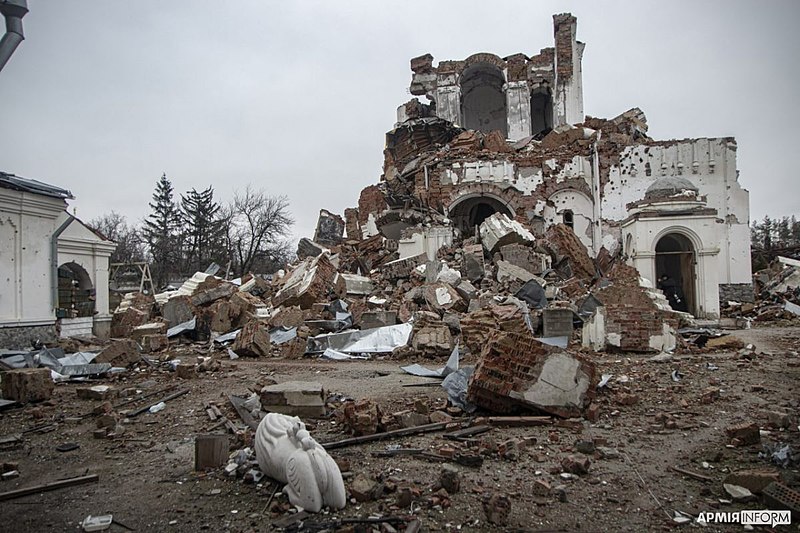
This year’s recipients of the Nobel Peace Prize spoke out against the ongoing war that Russia is waging on Ukraine, which is moving toward its 10th month. The recipients sent a strong, unified message but had some differences in their condemnation of Russian leader Vladimir Putin and the Kremlin.
This year’s Nobel Peace Prize award recipients went to jailed Belarusian activist Ales Bialiatski, the Russian human rights organization Memorial and the Ukrainian Center for Civil Liberties. Bialiatski’s wife Natallia Pinchuk accepted the award on his behalf during the ceremony in Oslo that takes place every December 10, the day that Alfred Nobel died in 1896.
“Ales and we all realize how important and risky it is to fulfill the mission of civil rights defenders – especially in the tragic time of Russia’s aggression against Ukraine,” Pinchuk told Al Jazeera.
Oleksandra Matviichuk of the Ukraine Center for Civil Liberties dismissed the calls for Russia to keep the supposedly annexed parts of Ukraine in a political compromise.
“Fighting for peace does not mean yielding to pressure of the aggressor, it means protecting people from its cruelty,” said Matviichuk. “Peace cannot be reached by a country under attack laying down its arms. This would not be peace, but occupation.”
Jan Rachinsky of Memorial said that the current state of civil society in Russia is a reflection of its own “unresolved past.” Rachinsky ripped into the Kremlin’s efforts to denigrate Ukraine’s history, statehood, and independence, as well as that of former Soviet Union countries, saying that it turned into the Kremlin’s “justification for the insane and criminal war of aggression against Ukraine.”
The British defense ministry on Monday issued its latest intelligence bulletin, noting the previous comments made by Kremlin spokesman Dmitry Peskov regarding Moscow’s intentions for the war. The ministry said that the goals appear to be unchanged.
The ministry said that Moscow is still likely looking to control the four regions it claims to have annexed: Luhansk, Donetsk, Kherson, and Zaporizhzhia and that Russian military planners are likely looking to prioritize further advancing into Donetsk.
However, the ministry said that Russia may fail to achieve its goals as the Russian military appears unable to “generate an effective striking force” that could recapture the four areas.







