Romania is set to monitor Ukrainian grain that would be transiting through the country, stopping short of imposing a temporary ban on imports. The move comes amidst concerns of their own interests from a surge of more affordable supplies due to the war.
The Romanian agriculture ministry said on Wednesday that it would be monitoring cargos of Ukrainian grain that is transiting through the country. The ministry added that it would also do quality checks on food products at border checkpoints, stopping short of temporarily banning imports of Ukrainian grain.
Romanian agriculture minister Petre Daea held a video call with Ukrainian agriculture minister Mykola Solsky asking for “solutions to restrict grain and oilseeds exports to Romania,” according to the statement released by the ministry.
Daea and Solsky are set to meet in Bucharest on Friday to discuss the best solutions for both countries.
The move follows those by Hungary, Poland, and Slovakia, which imposed temporary bans on imports of Ukrainian grain to protect their markets from a surge of more affordable supplies as a result of the war.
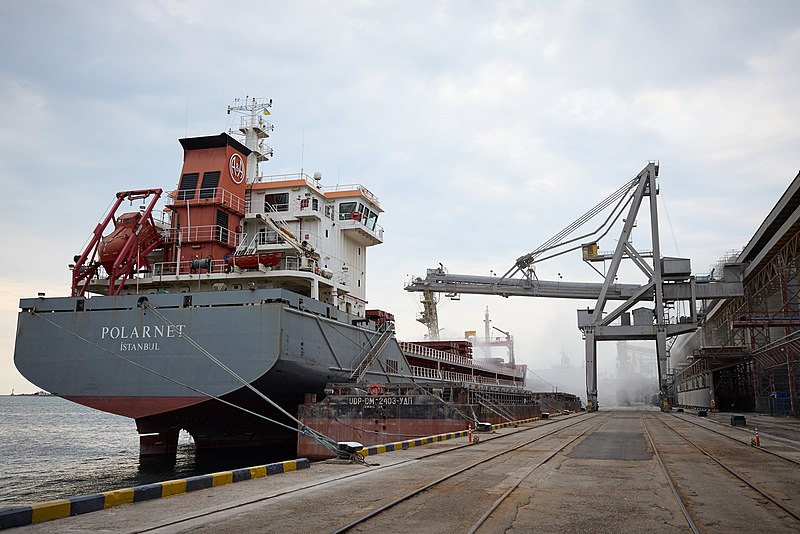
Bulgaria also joined in imposing a temporary ban on imports of Ukrainian grain as countries in central and eastern Europe are facing pressure to protect their local farmers. Kyiv has sought to find alternatives in neighboring countries as access to its own ports is limited due to blockades by Russian ships.
However, the logistical bottlenecks and the shorter distances meant that millions of tons of Ukrainian grain ended up in neighboring countries which disrupted local demand and prices. Ukrainian grain is exempted from European Union customs taxes and is considered more affordable compared to those produced in the EU.
On Thursday, the British defense ministry said in its intelligence update that the Kremlin issued a statement on Russian leader Vladimir Putin’s visit to the occupied Ukrainian territories in the south. The statement used the Russian spelling of Ukraine’s Dnipro river, describing Putin as having visited the “Dnipr Group of Forces,” one of the first references to the existence of such a group, according to the ministry, “indicating a large, task-organized operational formation.”