


 Flydubai Co-Pilot Planned Suicide Attack on Israel Airport, UAE Says
  Yandex Data Center Hit by Drone Strike as Russia-Ukraine Cyber Infrastructure Attacks Escalate
  Ripple Chairman Chris Larsen Donates $22.5 Million Ahead of US Midterms
  Houthis Warn Saudi Airports After Deadly Riyadh Attack
  Trump Calls for Zelenskyy Replacement Amid Russian Diesel Deal
  US, EU Push for Action Against Asia’s Excess Factory Capacity
  Russian Strikes Kill Six in Ukraine, Including Three in Kharkiv
  US Charges Maduro and Wife With Torture Conspiracy
  Trump Announces Russia-Ukraine Energy Ceasefire Amid U.S. Pressure on Kyiv
  Trump Announces Russia-Ukraine Energy Ceasefire as Zelenskiy Awaits Details
  Flavio Bolsonaro Leads Lula 49%-45% in Brazil Runoff Poll
  Mahmoud Abbas Postpones Palestinian Elections to September 2027
  Trump Sanctions International Criminal Court, Sparking EU Backlash
  Trump Secures Russian Diesel Deal as US Fuel Prices Surge
  Zelenskiy Slams US Over Deadly Russian Strikes on Ukraine
  Zelenskiy Offers Russia Energy Truce Amid Trump Pressure
  Trump Cancels Alabama Football Trip as Hurricane Isaias Approaches


 Add as a preferred source on Google
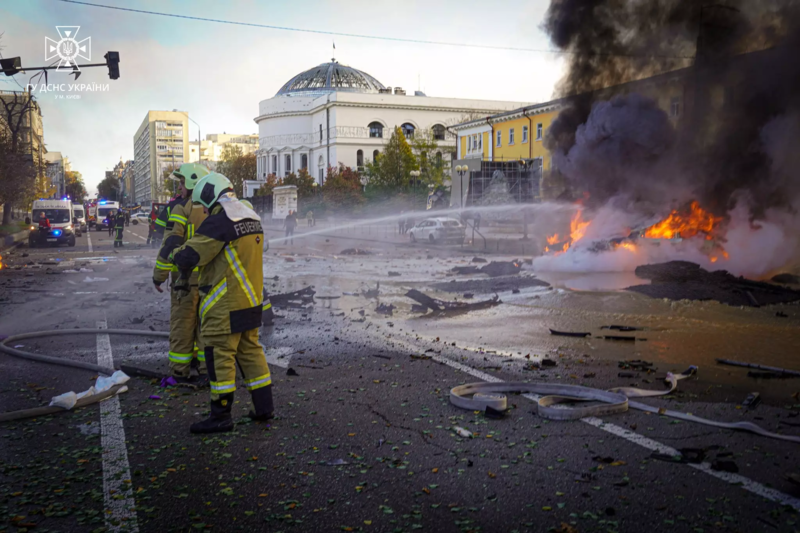
Iran has now come under scrutiny for its alleged involvement in the ongoing war Russia is waging on Ukraine. The British defense ministry said Russia is still using Iranian-made drones in its attacks.
The British defense ministry said in its intelligence update Monday that Moscow is still using Iranian-made drones to attack Ukraine, as Ukrainian forces advance into the partially-occupied Kherson region. The ministry said that Russia appears to use drones to infiltrate Ukraine’s air defenses instead of using its own long-range precision weapons that are dwindling in supply.
“Russia continues to use Iranian unmanned aerial vehicles (UAVs) against targets throughout Ukraine. Ukrainian efforts to defeat the Shahed-136 UAVs are increasingly successful with official sources, including President Zelenskyy, claiming that up to 85 percent of attacks are being intercepted,” said the ministry.
The US State Department also issued a warning to Russia Monday, that there would be serious repercussions should it decide to use a nuclear weapon on Ukraine. This comes as Washington, and other countries in the West are accusing Moscow of using the “dirty bomb” accusation on Ukraine as a pretext for escalating the war.
“It would certainly be another example of President Putin’s brutality if he were to use a so-called ‘dirty bomb.’ There would be consequences for Russia whether it uses a ‘dirty bomb’ or a nuclear bomb. We’ve been very clear about that,” State Department spokesperson Ned Price told reporters.
Price also stressed the importance that Moscow would know of the “profound nature of the consequences” that Russia would face should it use nuclear weapons. However, Price added that Washington has not seen any indication that Moscow is preparing to use a nuclear weapon, but that the concern over the use of a “dirty bomb” levied by Russian officials who suspect that Kyiv is planning to use such a weapon.
A survey by the Kyiv International Institute of Sociology from October 21 to October 23 showed that the majority of Ukrainians are in favor of the country maintaining its armed resistance to Russia’s invasion. 86 percent of those who answered the survey said armed resistance was necessary to continue fighting back Russian forces even as missile and drone attacks by Russia continue.







