South Korea’s food prices surged by 7.3 percent on-year due to a short supply of agricultural products amid the outbreak of bird flu.
Consequently, the country's food price inflation in the second quarter ranked the third-highest among members of the Organization for Economic Cooperation and Development (OECD).
The on-year rise was the fastest gain since 2011 when food prices soared 7.8 percent in the same period, according to the OECD and Statistics Korea.
It was also far above the OECD average of 1.6 percent and the third-highest among the 38 OECD member countries that announced their inflation indexes, following Turkey with 18 percent and Australia with 10.6 percent.
It climbed up 23 notches from last year when its grocery and nonalcoholic beverage prices increased 2.5 percent.
Such an uptrend in food prices continued to prolong in July, raising concerns that the current contracted supplies will continue to fail to meet demand until next month when the Chuseok holiday starts.
Last month, agricultural, livestock, and fisheries product prices advanced 9.6 percent on-year.
The country's prices of agricultural, livestock and fisheries products grew 17.9 percent on year in April, with those of green onions soaring 270 percent.
Due to higher farm product costs, consumer prices rose over 2 percent for the third straight month in June, indicating an inflationary pressure buildup.
Dining out also became more expensive with the prices of seven out of the eight dishes most favored by South Koreans increasing between the January-June period.
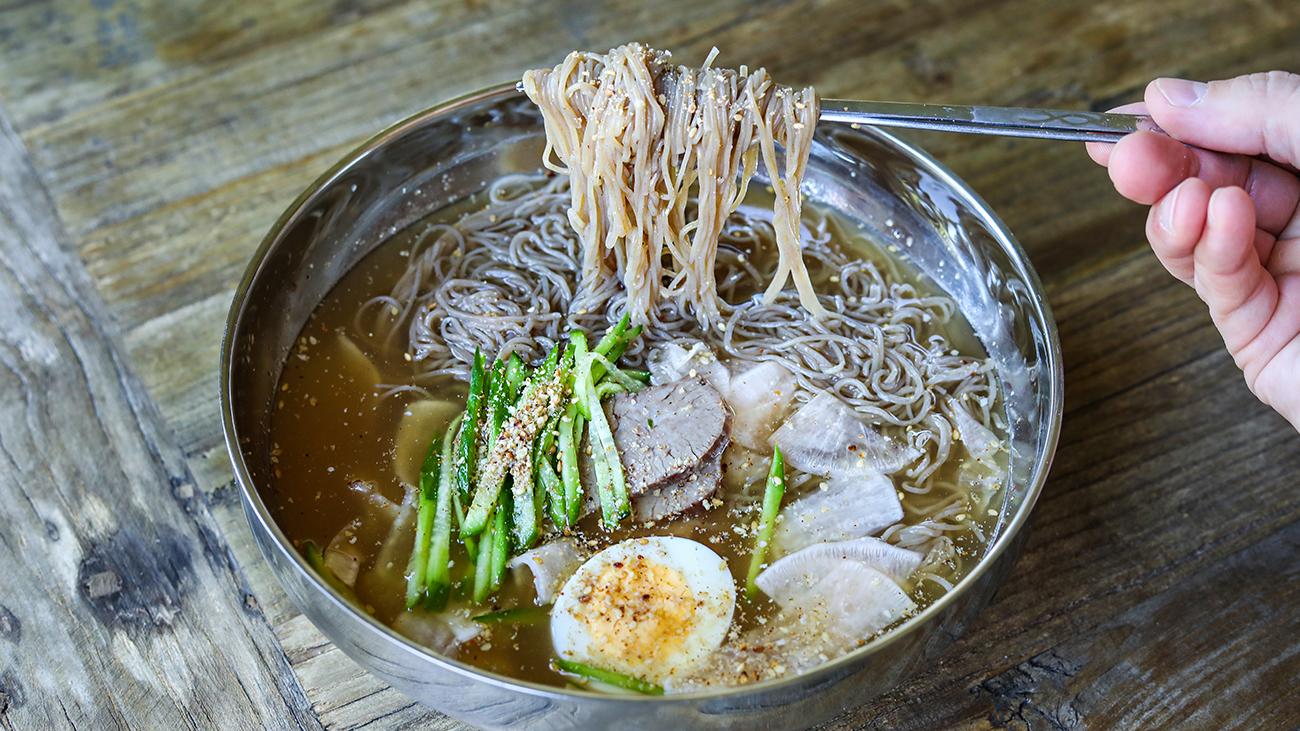
Prices of naengmyeon in the Seoul metropolitan area shot up nearly 6 percent in April to 9,500 won, on average.
The second-largest gainer was gimbap, with prices increasing 3.2 percent on-year gain to 2,731 won.