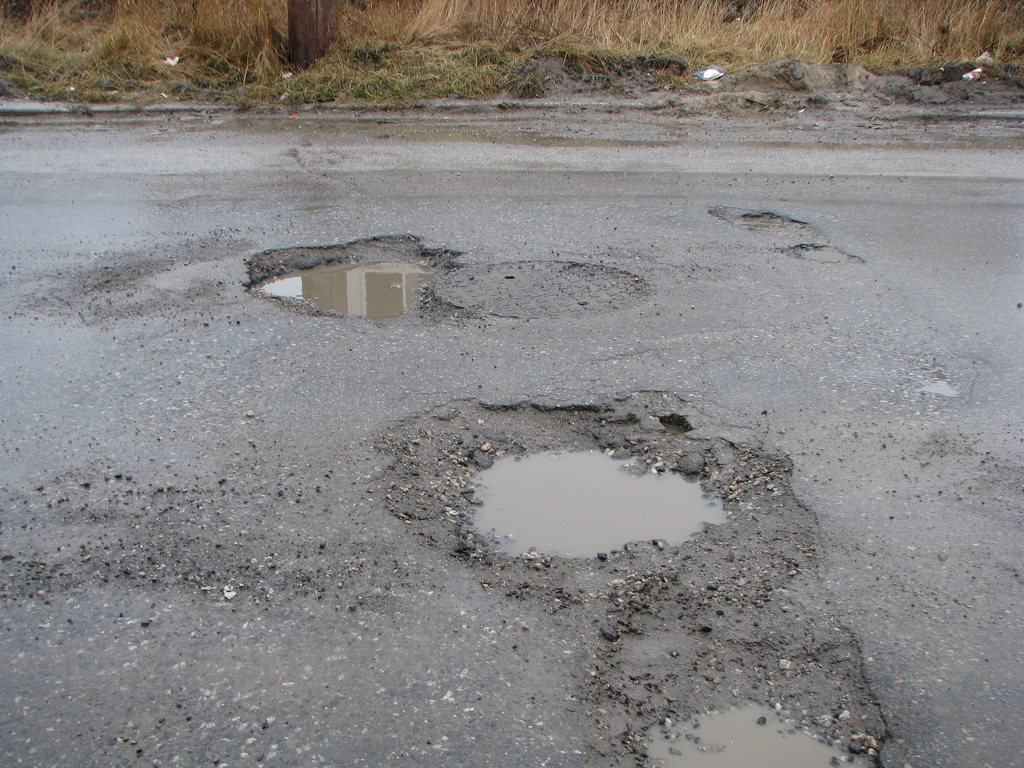
Driving through traffic is bad enough in today’s modern cities but potholes and congestion caused by detour signs that read “Road Closed For Repairs” can make the practice infinitely more aggravating. Thanks to a new self-healing road technology unveiled by a Dutch scientist, this might no longer be the case in a few years. First, though, it would need to be implemented.
The concept of self-healing roads has been around for a long time, with quite a few attempts in the past ultimately failing. In the case of Erik Schlangen’s discovery from the Delft University in the Netherlands, the world could be looking at a truly promising revolution in road-building. The method basically involves infusing asphalt with steel and heating it, Futurism reports.
In a recent TED Talk presentation, Schlangen showed how heating the steel wool-infused asphalt using a microwave could allow it to melt and fill up any hole of crack that might have developed over time. Naturally, since a microwave is not exactly the easiest tool to heat roads with, an induction machine would be used instead.
According to the Dutch expert, the government could save millions by implementing his concept on public roads. Granted, doing so would add 25 percent to the cost, but Schlangen argues that the benefits far outweigh the potential issues it would involve.
For starters, there’s the matter of practically eliminating the need to close off roads for repair. The technology could also mean fewer loose stones and potholes that cause considerable damage to cars every time they are on the road.
As The Verge notes in a recent article self-healing road projects have been implemented in different parts of the world, many of which have fared quite well. As Schlangen pointed out, however, even the normal asphalt roads with nothing special mixed in them can remain pristine for up to 10 years. Only time will tell whose technology is truly superior.