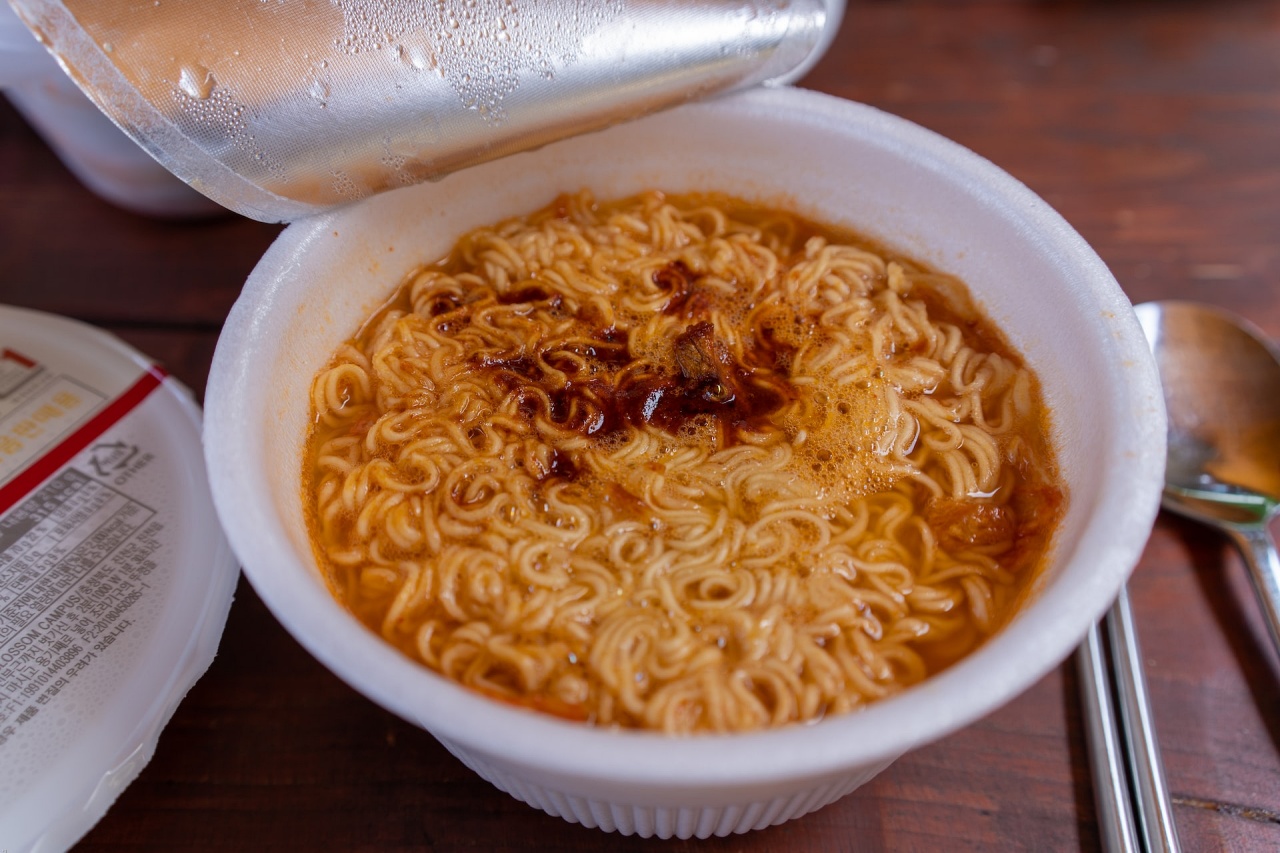
Nongshim’s Shin Ramyun is one of the leading instant noodle brands in South Korea, and the company has also started exporting its products overseas. Taiwan is one of Nongshim’s customers, with thousands of Shin Ramyun being sold in the country.
However, in the recent batch of exports, Taiwan was said to have destroyed at least 1,000 boxes of Nongshim’s Shin Ramyun instant noodles. These were said to have been seized at the country’s border as they were found to contain pesticide residues.
To be more exact, Focus Taiwan reported that a total of 1,128 kilograms of Nongshim Shin Ramyun cup noodles with black tofu and kimchi were confiscated after samples that were tested on Dec. 9, 2022, showed the products’ seasoning sachets containing 0.075 mg/kg of ethylene oxide (EO). The products were locally imported by Shing Her International.
The said substance is considered a carcinogen and has been categorized by the Taiwanese Food and Drug Administration (FDA) agency as a banned pesticide. The discovery of the hazardous substance resulted in the failure of the Nongshim Shin Ramyun to pass the customs inspection in Taiwan.
The Korea Herald reported that the ethylene oxide found in the soup packets of each cup noodle is mostly used for disinfection purposes in pesticides. It is also classified as a group 1 carcinogen which is said to be the highest risk category under the World Health Organization’s standards.
Then again, Nongshim released a statement to refute the reports that its Shin Ramyun were found to have carcinogens. The company said that the component detected in its instant noodle product was 2-chloroethanol or 2-CE and not the harmful EO. Nongshim explained that the TFDA converted 2-CE levels to EO based on its state health rules, thus the results.
"We believe 2-CE was found by temporary and unintentional cross-contamination during the manufacturing process, or during the cultivation stage for the raw material production process," an official at Nongshim company said. "Nongshim uses different raw materials for exports and products sold in Korea and there is no problem with domestic products, with the analysis showing that no such ingredient was detected for domestic products."