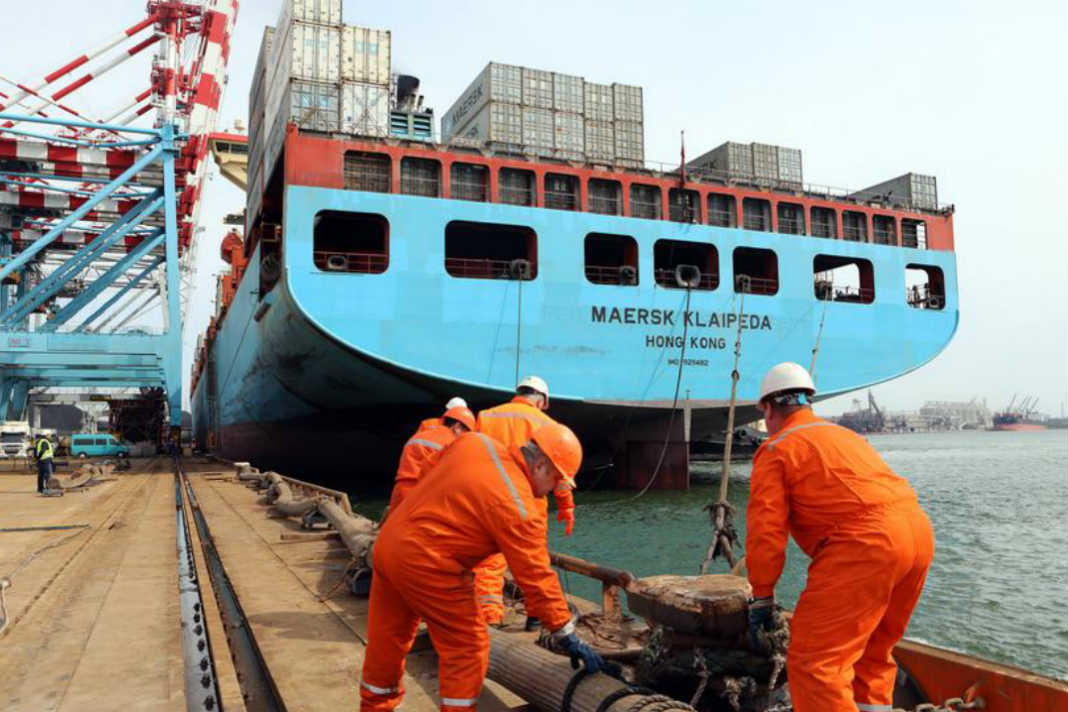
The international shipping industry warned of a global trade crisis with up to 400,000 crew stranded either at sea or at home due to the pandemic.
Guy Platten, secretary-general of the International Chamber of Shipping, described the situation as a "ticking time-bomb" that poses risks to the supply chain.
According to the United Nations Conference on Trade and Development, around 80 percent of world trade by volume is carried on ships, ranging from container ships to dry bulk carriers.
However, operations are being hindered by travel restrictions, preventing crews from disembarking or from traveling to a port where ships are waiting for crew changes.
Seafarers are also having difficulties obtaining entry or exit visas, compounded by the suspension of commercial flights that would bring the crew to and from their ships.
Those affected make up over a fifth of the seafarers who navigate 96,000 commercial vessels.
Governments have also been slow to implement the International Maritime Organisation's 12-step protocol for safe crew changes, leaving the crew stranded at sea increasing weekly, Platten noted.
The shipping industry is calling on governments to create "safe corridors" such as designating seafarers as "key workers" to allow them to travel without restrictions in joining or leaving a vessel and creating safe areas in airports for their transit.
Rajesh Unni, chief executive of Singapore-based ship manager Synergy Marine Group, noted that while some governments such as the Netherlands have taken action, they were "too little and too slow" to ensure the continuity of supply-chain,
He added that the welfare of seamen should not be ignored.
Henriette Hallberg Thygesen, fleet and strategic brands chief of Maersk, the world's largest container ship operator, noted of the urgent need to put up safe corridors between key sources of seafarers such as the Philippines and India and crew change hubs around the world.