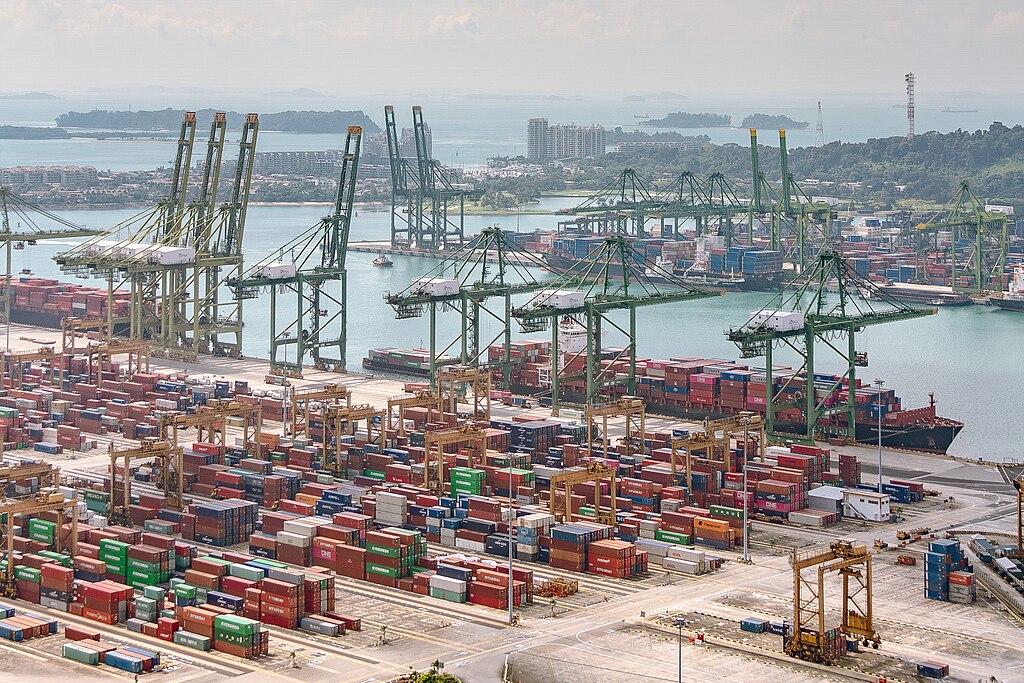
Singapore is expected to keep its monetary policy unchanged at the Monetary Authority of Singapore (MAS) meeting on October 14, as the city-state’s economic outlook remains resilient despite global trade headwinds caused by U.S. tariffs. According to a Reuters poll, 10 of 14 analysts predict MAS will maintain its current policy stance, supported by steady growth in domestic sectors.
Maybank economist Chua Hak Bin noted that strong construction activity, fiscal stimulus, and easing interest rates are helping offset the trade slowdown. He pointed to signs of recovery in retail, property, banking, and capital markets during the third quarter, suggesting Singapore’s economy is stabilizing even as exports contract.
ANZ’s Khoon Goh echoed this optimism, highlighting that uncertainty around Singapore’s outlook has eased. He added that the robust global semiconductor cycle, driven by AI investments, could prompt another GDP upgrade for 2025. The government last raised its 2025 growth forecast to 1.5–2.5% in August after stronger-than-expected results in the first half of the year.
Singapore’s inflation remains subdued, with core prices rising just 0.3% in August — the slowest pace since early 2021. This benign inflation environment gives MAS flexibility to manage policy settings without stoking price pressures.
The MAS, which manages the Singapore dollar’s nominal effective exchange rate (S$NEER) instead of using interest rates, last adjusted its policy in April. Since then, most central banks, including the U.S. Federal Reserve and European Central Bank, have taken dovish turns amid moderating global growth.
However, Moody’s Analytics economist Denise Cheok cautioned that weaker exports and industrial output could lead MAS to consider easing in the near term, especially as imported inflation falls with lower global oil prices.