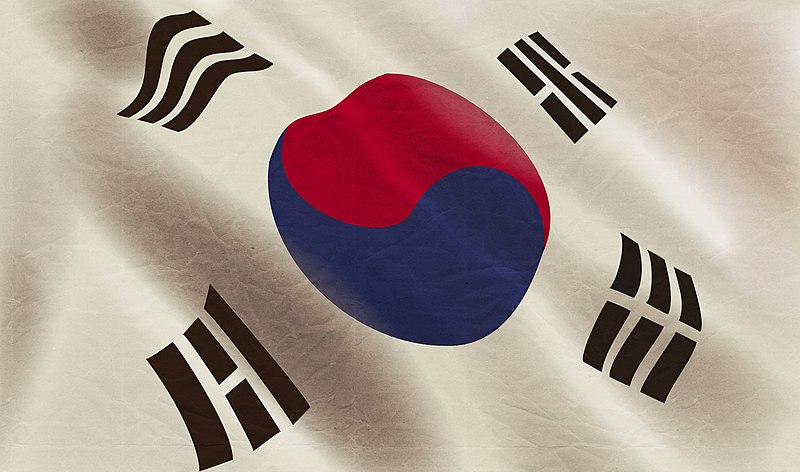
The South Korean government introduced a strategy this week that would compensate those who are victims of Japan’s wartime forced labor. The compensation would come from its own public foundation, prompting criticism from the families of the victims.
The South Korean foreign ministry unveiled the plan during a public hearing on Thursday, which would see victims of Japan’s forced wartime labor compensated through its public foundation instead of funds from Japanese companies. The foundation would be funded by businesses that benefited from a 1965 treaty where South Korea received a package of $300 million in economic aid and $500 million in loans from Japan.
The Foundation for Victims of Forced Mobilization by Imperial Japan said it was able to secure initial donations from steelmaker company POSCO that totaled $3.2 million.
“We’ve reviewed that it is possible for a third party to make payment as legal bonds on behalf of the defendant Japanese company,” said the ministry’s Asia-Pacific affairs director-general Seo Min-jung, adding that a “creative approach” was needed.
Back in 2018, the South Korean Supreme Court ordered Japanese companies to pay reparations to former forced laborers. While 15 South Koreans won such cases, none of them have been compensated. The spokesperson for the Foundation, Shim Su-kyun, said he intends to encourage South Korean firms to donate “from the perspective of social responsibility.”
The unresolved legacy of Japan’s occupation of Korea from 1910-1945 has long been a source of strain in the relations between South Korea and Japan. This included restitution for Koreans that were forced to work in Japanese companies and military brothels at the time of the occupation.
On Wednesday, South Korean defense minister Lee Jong-sup told reporters during a news conference that South Korea and the United States are set to hold tabletop exercises in February in an effort by the allies to counter the rising threat from North Korea. Officials in Seoul and Washington said they were having discussions to improve joint nuclear planning and implementation, as well as boosting information sharing and holding tabletop drills, but the timeline had yet to be finalized.
“We’re planning to hold tabletop exercises in February between defense officials on operating means of extended deterrence under the scenario of North Korea’s nuclear attacks,” said Lee.