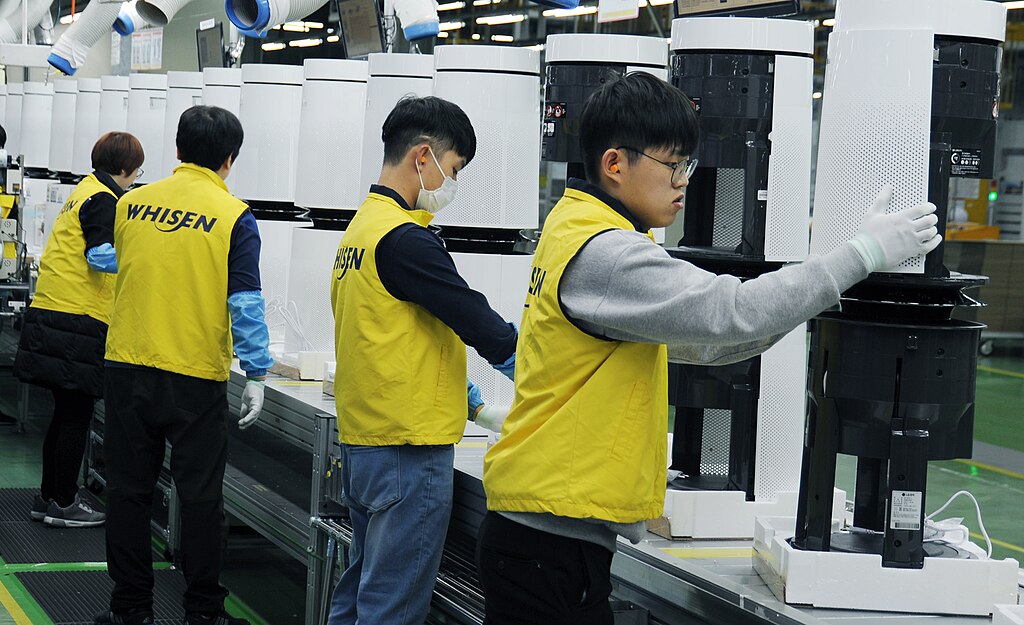
South Korea's manufacturing sector saw its sharpest contraction in over two years in April, as U.S. tariffs imposed by President Donald Trump triggered a steep decline in demand. According to S&P Global, the country’s Purchasing Managers’ Index (PMI) dropped to 47.5 in April from 49.1 in March—its lowest reading since September 2022 and the third straight month below the 50-point threshold that separates growth from contraction.
The PMI survey showed significant declines in both output and new orders, the worst since June 2023. New export orders, a key indicator for South Korea’s trade-dependent economy, fell for the first time since October 2024 and posted their biggest drop in 22 months. Manufacturers cited challenging domestic conditions and the disruptive impact of U.S. trade policies as major contributors to the downturn, with stalled product launches and reduced domestic and overseas sales.
This bleak data contrasts sharply with upbeat trade figures released a day earlier, driven by strong semiconductor exports. However, the auto sector has already shown signs of weakening under the weight of U.S. tariffs. In response, South Korea has begun talks with the U.S. to negotiate a trade package aimed at reversing the tariffs before a reciprocal duty pause ends in July.
Business sentiment also plunged, with manufacturers turning their most pessimistic since June 2020. Excluding the pandemic era, it was the lowest outlook recorded since survey tracking began in 2012. Input purchases, work backlogs, and employment figures all declined significantly, with job cuts reaching their highest level since September 2020.
The data underscores growing economic headwinds as South Korea grapples with external trade shocks and lingering domestic political uncertainty following ex-President Yoon Suk Yeol’s failed bid to impose martial law.