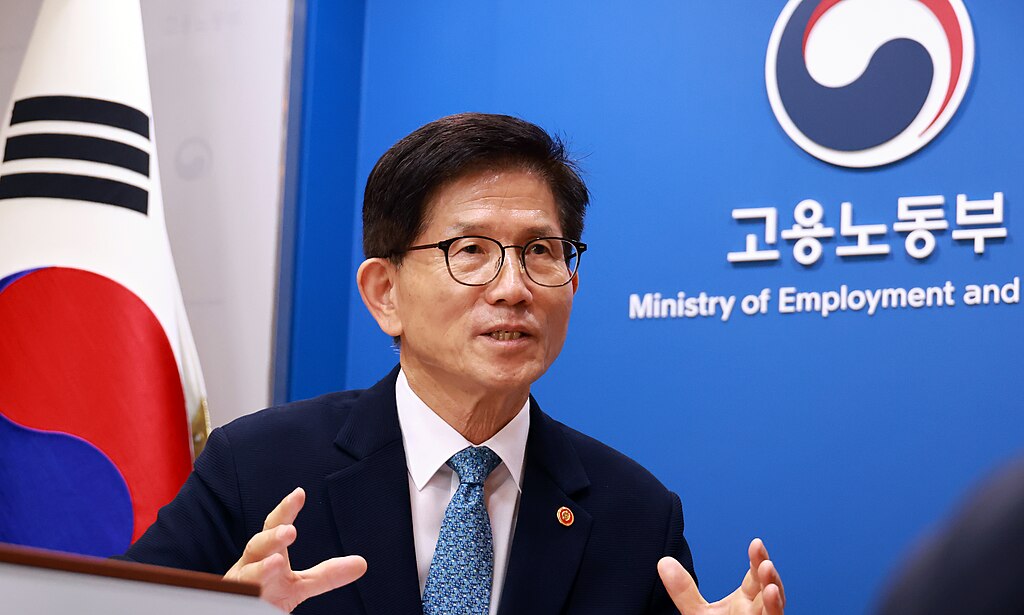
South Korea’s conservative presidential candidate Kim Moon-soo said he is open to increasing Seoul’s contribution toward the cost of stationing U.S. troops, aligning with demands made by U.S. President Donald Trump in recent years. Kim made the comments during a meeting with the American Chamber of Commerce Korea, ahead of the June 3 snap election called after former President Yoon Suk Yeol was removed from office.
Kim, representing the People Power Party, emphasized the importance of maintaining strong U.S. military presence in the country. “People get nervous when President Trump talks about raising South Korea’s share, but I believe we can raise it to a certain degree,” he stated. He added that it is South Korea’s responsibility to ensure U.S. forces are well-supported.
Currently, about 28,500 American troops are stationed in South Korea to deter threats from nuclear-armed North Korea. Under the latest five-year agreement signed in October, South Korea agreed to increase its share of the cost by 8.3%, bringing the total to 1.52 trillion won ($1.09 billion). The funds support local labor, construction, and logistics related to U.S. military operations.
Trump has previously tied military cost-sharing to trade talks, suggesting that the financial burden of hosting U.S. forces should be considered alongside issues like tariffs. South Korean officials, however, have asserted that the existing cost-sharing agreement is not subject to renegotiation and should remain separate from trade negotiations.
Kim’s remarks could reignite debate over South Korea’s defense spending and its alliance with the United States, particularly amid shifting geopolitical dynamics in East Asia and growing concerns over North Korea’s nuclear ambitions. The outcome of the upcoming presidential election could influence Seoul’s future defense policies and its financial commitment to the U.S. alliance.