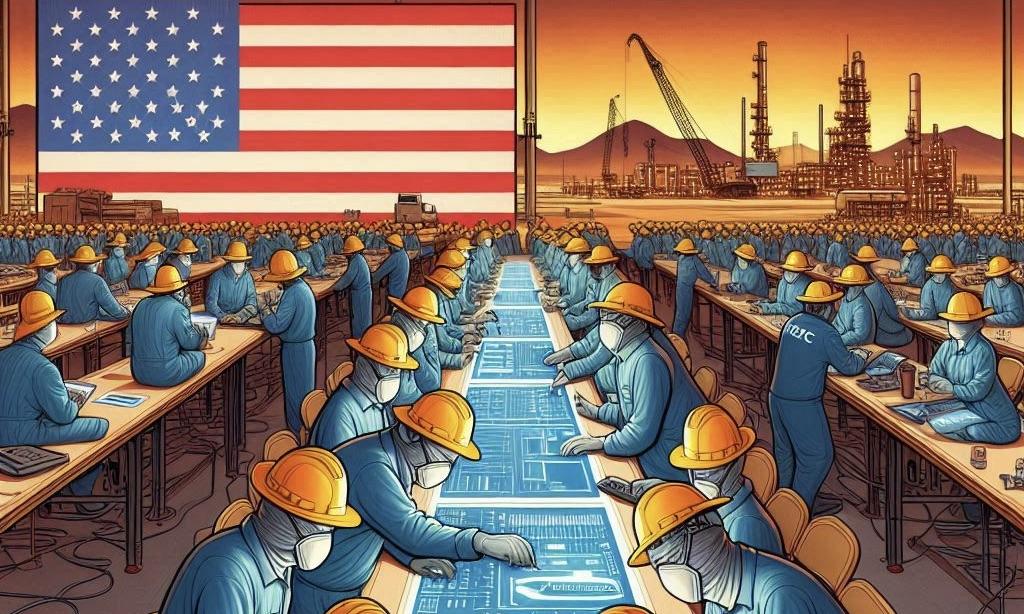
TSMC's Arizona chip fab is grappling with delays and operational challenges, primarily due to cultural differences and its inability to attract top U.S. talent. Despite efforts to adapt its work culture and reduce employee burden, the company struggles to compete with higher-paying industries.
TSMC's Arizona Fab Faces Delays Amid Cultural Gaps, Wage Disparities, and Labor Shortages
In recent months, the continuous stream of leaks and expert commentary has only underscored the urgent nature of TSMC's challenges with its flagship American chip fabrication unit in Arizona. The Arizona fab's struggle to take off is reportedly due to two key factors: a cultural gap between the United States and Taiwan and TSMC's tendency to offer lower wages.
The New York Times published a comprehensive commentary on TSMC's predicament on August 8. The commentary emphasizes the frustration of American workers with the company's strenuous work conditions and the management's efforts to enlist employees for tasks beyond their job responsibilities to avert further operationalization delays at the fab unit.
TSMC has already postponed the commissioning of its Arizona unit, and commercial operations are now anticipated to commence in the first half of 2025. Please keep this in mind.
This aligns with Wccftech's previous reporting, where we highlighted the significant obstacle of freshwater scarcity in Arizona for TSMC's fab unit, exacerbating the company's labor shortage. Intel's construction of a substantial semiconductor complex in the state, with a robust network of university partnerships, further underscores the gravity of TSMC's challenges.
TSMC Struggles to Adapt Taiwanese Work Culture and Attract Top U.S. Talent Amid Wage Challenges
TSMC has recognized that the intense culture of Taiwan is not easily translatable to the United States, at least not without significant adjustments to foster a more balanced work-life culture. The organization's measures to reduce the burden on its American employees and decrease the frequency of meetings underscore the importance of cultural adaptation in global business operations.
However, the primary factor contributing to TSMC's challenges is its endeavor to recruit and retain the nation's top 1 percent of talent, with salaries within the top 20 percent. This paradigm could be more sustainable because the semiconductor manufacturer competes with prestigious startups, hedge funds, and investment banks to attract this talent.
The solution is simple: either TSMC allocates a substantial sum of money as a powerful incentive or attempts to establish extensive partnerships with American institutions to recruit raw talent directly and provide in-house training. Nevertheless, the latter alternative necessitates a significant amount of time.