


 Philippines Current Account Deficit Seen at $19.1 Billion in 2026
  Container Ship Sinks in Strait of Hormuz as Iran Attacks Escalate
  CVS Pharmacy Agrees to $315 Million Opioid Settlement
  Lululemon Cuts Jobs, Restructures Team After Product Quality Issues
  Wall Street Falls as Hot US Inflation Fuels Fed Rate Hike Bets
  Kalshi CEO Defends Federal Oversight Amid Prediction Markets Legal Battle
  IMF Maintains 2027 Global Growth Forecast at 3.4% Amid Rising Risks
  Alibaba Unveils Qwen AI Smart Glasses, Shares Rise 2%
  US Dollar Hits 18-Month High as Inflation Fuels Fed Rate Hike Bets
  Italy’s Meloni Warns US-Russia Diesel Deal Could Weaken Ukraine Sanctions
  US Dollar Slips From 18-Month High Ahead of Key Inflation Data
  Trezor Cuts Reseller Network After Ledger Security Breach
  Trump Defends Russian Diesel Deal Amid US Sanctions Backlash
  US Dollar Index Falls as Fed Signals Caution, Indian Rupee Surges
  Fed’s Williams Sees One More Rate Hike in 2026, None in 2027
  Gold Prices Mixed Ahead of US Inflation Data and Fed Rate Outlook
  Oil Prices Fall as Russia Signals Higher Diesel Exports


 Add as a preferred source on Google
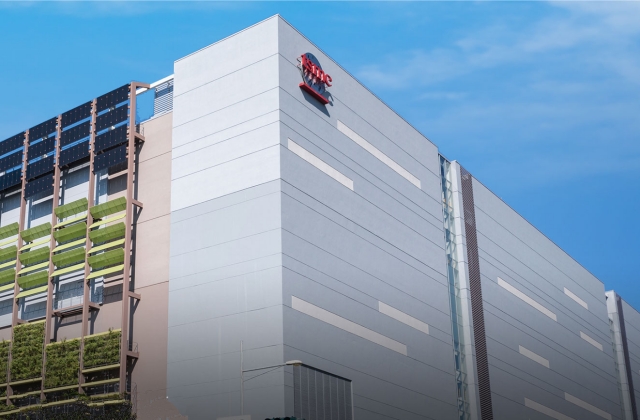
TSMC, or the Taiwan Semiconductor Manufacturing Company, is the largest semiconductor maker in the world, and it was reported that it has recently outdone China’s Tencent Holdings Ltd. to become the most valuable company in Asia today.
It was said that Tencent lost its first-place ranking amid Beijing’s crackdown on tech firms in the country. Apparently, the Chinese government’s actions took a toll on the Shenzhen-based technology conglomerate holding company, so TSMC was able to beat it in terms of share price and more.
Based on the reports, Tencent Holding’s shares have plummeted almost 30% since the start of June. This was amid the new rules and regulatory efforts that have let TSMC’s share price keep up and eventually surpassed Tencent's valuation.
According to CNBC, Tencent has slipped to second place, behind TSMC, with a market capitalization of over $536 billion. TSMC was able to reach its place as it soared due to overwhelming global demand for its semiconductor parts that are being supplied to auto and gaming companies worldwide. The Taiwanese firm was said to have doubled its share price since the outset of the pandemic last year.
TSMC officially took over Tencent on Tuesday this week when the latter’s stock dropped. Still, it bested Alibaba that came in at $481 billion.
It was noted that China’s crackdown has been hurting its homegrown tech firms. In fact, Tencent and Alibaba have both lost over $20 billion each this week after the country’s market regulator issued draft policies aimed at ending unfair competition on the internet.
Truly, China’s continuous and unwavering regulatory assault is crashing the market value of Tencent and other tech firms. This setback played a big role in pushing Taiwan’s TSMC to become Asia Pacific’s most valuable company.
SCMP further reported that TSMC’s success is hinged on the strong demand as companies worldwide struggle due to chip shortages. The company has been making efforts to double its semiconductor productions to be able to supply the needed chips.
“We view this round of internet regulation as coordinated and likely to persist to at least end-2021,” a strategist at UBS in Shanghai, Meng Lei, said regarding Tencent’s situation. “Therefore we think we have not reached the bottom, and in our tactical sector allocations we maintain underweight on the internet sector.”







