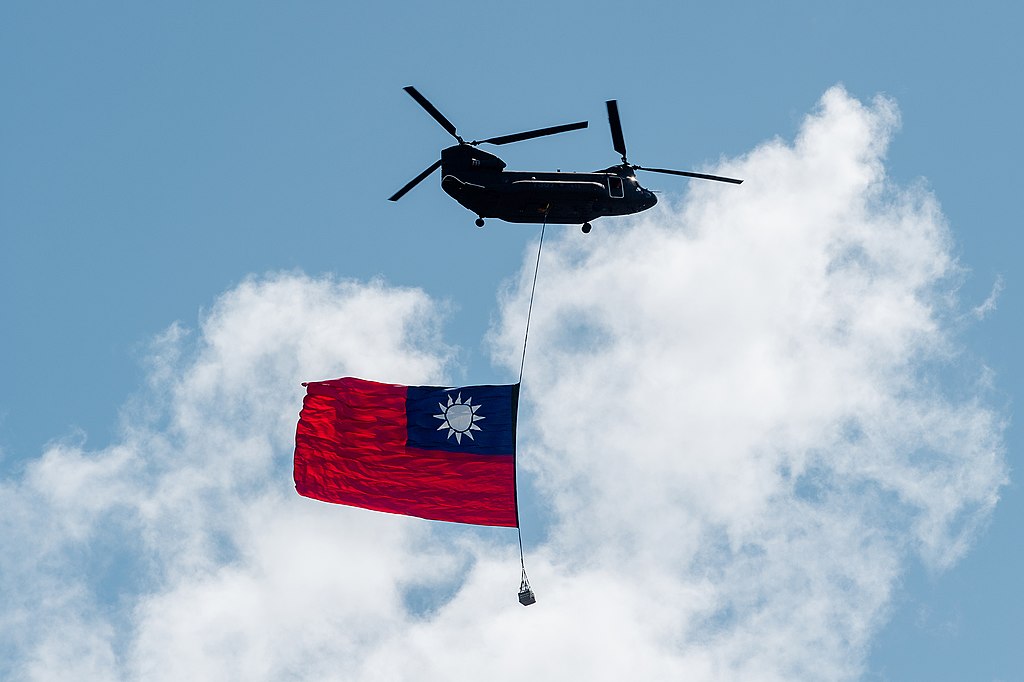
Taiwan’s Ministry of National Defense announced plans to expand collaboration with the United States, focusing on joint military cooperation, intelligence sharing, and strategic exchanges aimed at safeguarding regional peace and stability.
In its latest report to parliament, the ministry described the U.S. as Taiwan’s “most important strategic partner,” emphasizing efforts to enhance multi-domain and multi-level defense cooperation. The move comes as Taiwan faces growing military and political pressure from China, which claims the self-governed island as its own.
The ministry revealed that future plans include reciprocal visits, observation of military exercises, and deepened strategic dialogues on security policy and operational coordination. These initiatives, officials said, are meant to reinforce communication and coordination between Taiwanese and U.S. forces to maintain peace in the Taiwan Strait — a region increasingly tense due to China’s aggressive maneuvers.
Although Washington has no formal diplomatic relations with Taipei, it remains Taiwan’s primary military supporter under U.S. law, which mandates providing the island with defense capabilities. Taiwanese fighter pilots are already training on U.S. soil, including at facilities in Arizona, though such programs are usually kept low-profile due to their sensitive nature.
Taiwan’s defense ministry also accused Beijing of “normalized harassment” through joint combat-readiness patrols and psychological warfare designed to wear down Taiwan’s defenses and deter foreign intervention. The ministry said it is enhancing international intelligence cooperation to improve early warning capabilities against potential Chinese attacks, enabling faster and more effective responses.
Beijing has yet to comment on Taiwan’s latest statements. Taiwan’s government continues to reject China’s sovereignty claims, maintaining that the island’s future must be determined solely by its people.