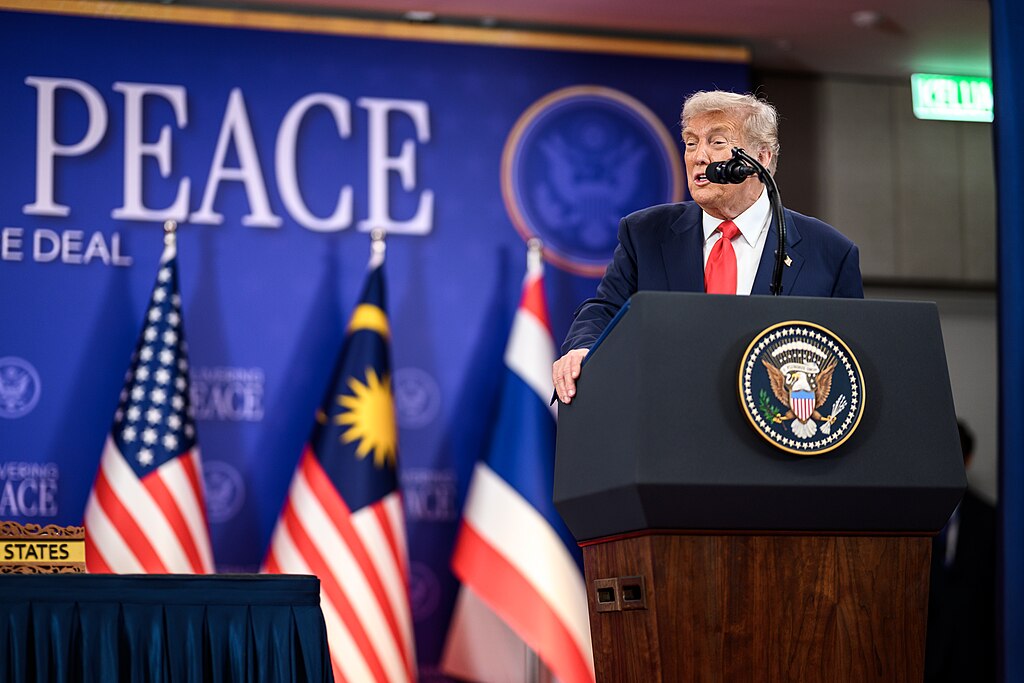
U.S. President Donald Trump announced Tuesday that the United States will temporarily pause “Project Freedom,” the military operation aimed at restoring commercial shipping through the Strait of Hormuz, as Washington moves closer to a potential agreement with Iran. Despite the pause, Trump confirmed that the U.S. naval blockade against Iran will remain active as pressure continues on Tehran.
Trump stated that “great progress” had been achieved toward a “complete and final agreement” with Iran. According to the president, Project Freedom will be suspended for a short period to determine whether the developing diplomatic deal can be finalized and officially signed. The announcement immediately drew global attention due to the strategic importance of the Strait of Hormuz, a key oil shipping route responsible for transporting nearly 20% of the world’s oil supply.
The decision follows heightened tensions earlier this week after the launch of Project Freedom triggered a military response from Iran. Tehran reportedly attacked multiple vessels in the Strait of Hormuz and launched missiles toward the United Arab Emirates. The escalating conflict raised concerns across global financial and energy markets, particularly impacting oil prices and shipping activity in the Middle East.
Defense Secretary Pete Hegseth emphasized that the United States is not seeking further escalation with Iran and described Project Freedom as a temporary mission designed to restore maritime security. Hegseth also insisted that a ceasefire agreement technically remains in place despite the renewed military confrontations near Hormuz.
Meanwhile, U.S. officials claimed American forces destroyed several Iranian small boats during recent encounters, although Iranian authorities disputed the reports and questioned the accuracy of the claims. Iran’s Foreign Minister Abbas Araghchi acknowledged progress in Pakistan-mediated negotiations but warned Washington against restarting military operations in the region.
The Strait of Hormuz remains central to the Iran conflict, global oil markets, and international shipping stability, making any diplomatic breakthrough highly significant for investors and world economies.