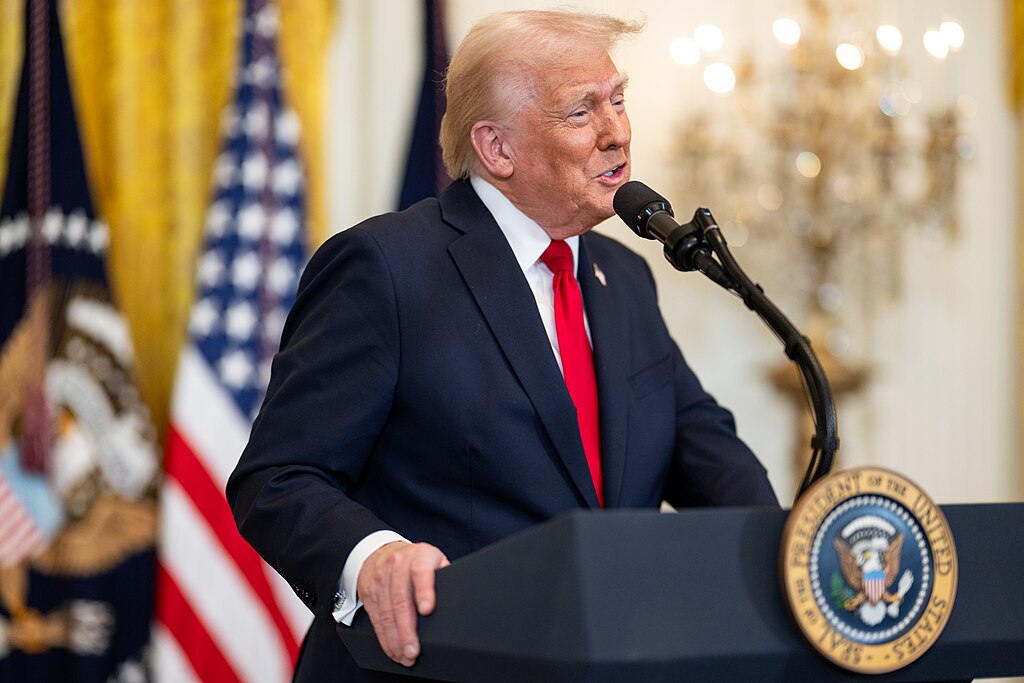
U.S. President Donald Trump delivered a fiery 56-minute speech at the United Nations General Assembly, attacking global migration, climate change policies, and U.S. allies while calling for harsher measures against Russia. The address, marked by sharp criticism and controversial remarks, underscored his familiar combative approach on the world stage.
Trump denounced rising levels of immigration worldwide, urging leaders to follow his administration’s strict border enforcement policies. He claimed mass migration threatens national identities, while human rights groups argue migrants are fleeing violence and poverty. In characteristic style, Trump said, “Your countries are going to hell,” positioning himself as a model for others.
Climate change was another focal point. Despite scientific consensus that global warming is real and driven by human activity, Trump dismissed it as a “con job.” He called for greater reliance on fossil fuels and criticized Europe’s renewable energy push, warning it would lead to the “death of Western Europe.” His stance contrasted sharply with his recent meeting with Britain’s King Charles, a strong climate advocate.
Turning to foreign policy, Trump rejected international efforts to endorse Palestinian statehood amid Israel’s Gaza offensive. He instead pushed for a ceasefire-for-hostages deal and criticized Hamas for terrorist attacks. On Ukraine, Trump mocked NATO allies for continuing Russian oil imports and threatened powerful tariffs on Moscow unless Europe joined his proposed economic measures. He hinted at sanctions against countries like India and China that maintain business ties with Russia.
Throughout his speech, Trump made several misleading claims, including false remarks about London’s mayor and U.S. inflation. He ended with personal complaints about the U.N., recounting being stranded on a broken escalator with First Lady Melania and a malfunctioning teleprompter.
Trump’s appearance reinforced his nationalist agenda, blending personal grievances with sweeping global critiques, and leaving allies uncertain about America’s role in addressing immigration, climate change, and international security.