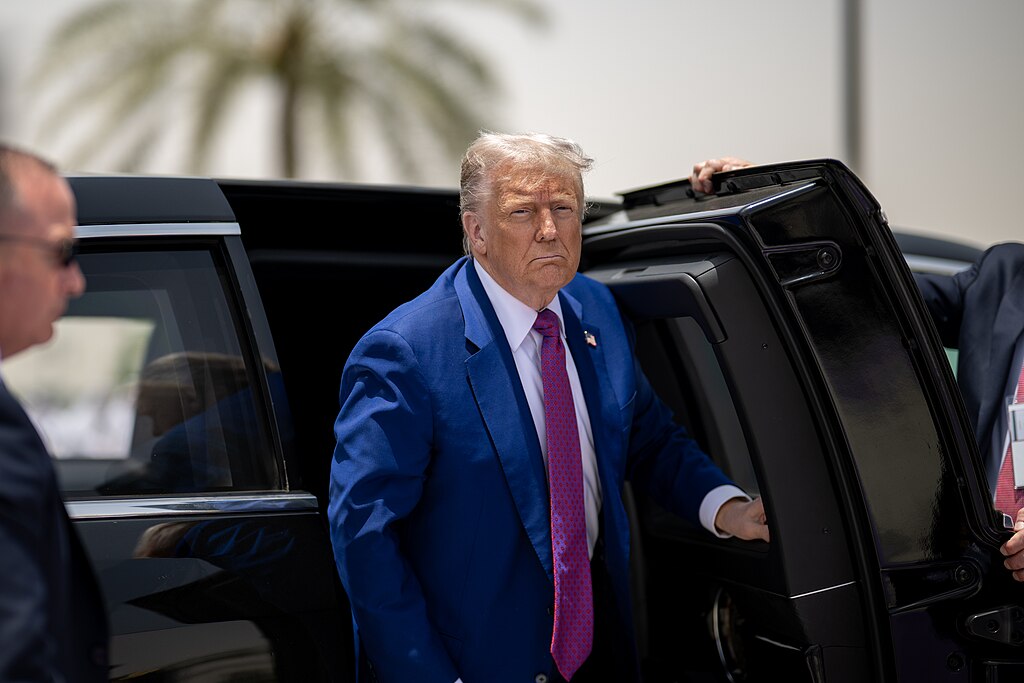
U.S. President Donald Trump has once again stirred global debate after declaring that the United States would acquire Greenland, even if such a move risks straining relations within the North Atlantic Treaty Organization (NATO). Speaking to reporters aboard Air Force One on Sunday evening, Trump said Washington could not allow strategic rivals such as Russia or China to gain influence over the Arctic island, insisting that U.S. control of Greenland was inevitable.
According to Trump, Greenland’s strategic importance to U.S. national security outweighs diplomatic concerns. He claimed that if the United States did not act, rival powers would step in, stating that “one way or another” Greenland would end up under U.S. control. Trump further suggested that Greenland itself should approach Washington with a proposed deal for a takeover, reinforcing his long-standing view that the island is critical to American defense interests.
When questioned about opposition from NATO allies and whether such an action could undermine the alliance, Trump dismissed the concerns, arguing that NATO relies more heavily on the United States than the other way around. He went as far as to say that the alliance would not exist without U.S. leadership, signaling a continued hardline stance on foreign policy and burden-sharing within NATO.
Trump has intensified his rhetoric on Greenland in recent weeks, emphasizing the island’s role in countering Russian and Chinese activity in the Arctic. The United States already maintains a military presence in Greenland, but Trump has repeatedly called for expanding that footprint to strengthen regional security. Greenland, home to nearly 60,000 people, is a self-governing territory within the Kingdom of Denmark.
Speculation around a potential U.S. takeover grew after reports emerged that the Trump administration was exploring multiple options, including economic incentives for Greenlanders and even military action. Danish and European leaders have firmly rejected these ideas, reiterating that Greenland is not for sale. Despite international pushback, Trump’s comments have fueled renewed uncertainty around U.S. foreign policy, Arctic geopolitics, and the future of NATO alliances.