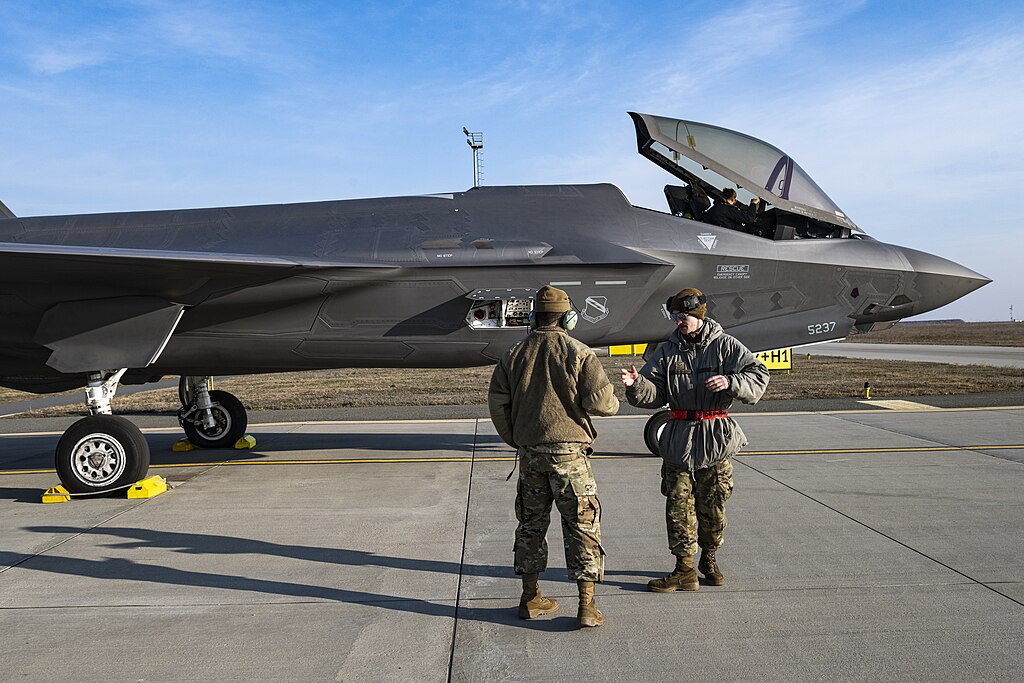
President Donald Trump indicated on Monday that he plans to move forward with a major arms deal that would allow Saudi Arabia to purchase advanced U.S.-made F-35 fighter jets. Speaking from the Oval Office, Trump said the U.S. “will be selling the F-35s,” confirming growing speculation ahead of Saudi Crown Prince Mohammed bin Salman’s visit to Washington.
If finalized, the sale would represent a significant shift in U.S. defense policy and could reshape the military balance in the Middle East. Saudi Arabia has reportedly requested up to 48 F-35 aircraft, a multibillion-dollar deal that recently cleared an important Pentagon review, according to Reuters. The kingdom has long sought access to the stealth fighter as part of its effort to modernize its air force and counter regional threats, especially from Iran.
The Saudi Air Force currently operates a fleet that includes Boeing F-15s and European-made Tornado and Typhoon jets, but acquiring the F-35 would provide a major technological upgrade. The aircraft’s advanced stealth features and combat capabilities have made it the world’s most sought-after fighter jet. Israel, the only Middle Eastern country currently flying the F-35, has used the aircraft for nearly a decade and continues to expand its fleet.
Any sale of the F-35 to regional states is closely evaluated under Washington’s long-standing obligation to preserve Israel’s “qualitative military edge,” which ensures Israel maintains superior defense capabilities. U.S. officials say this consideration remains central to the approval process.
Saudi Arabia made a direct appeal to Trump earlier this year, and the Pentagon’s policy office has spent months reviewing the proposal. However, congressional approval remains a potential hurdle. Lawmakers have previously opposed large arms deals with Riyadh due to human rights concerns, particularly following the 2018 killing of journalist Jamal Khashoggi.
The Biden administration had also weighed offering F-35 jets to Saudi Arabia as part of a broader diplomatic package tied to Saudi-Israel normalization efforts, but those talks stalled.
This renewed push for advanced U.S. military cooperation underscores Washington’s evolving defense partnership with Riyadh and its strategic calculations in the region.