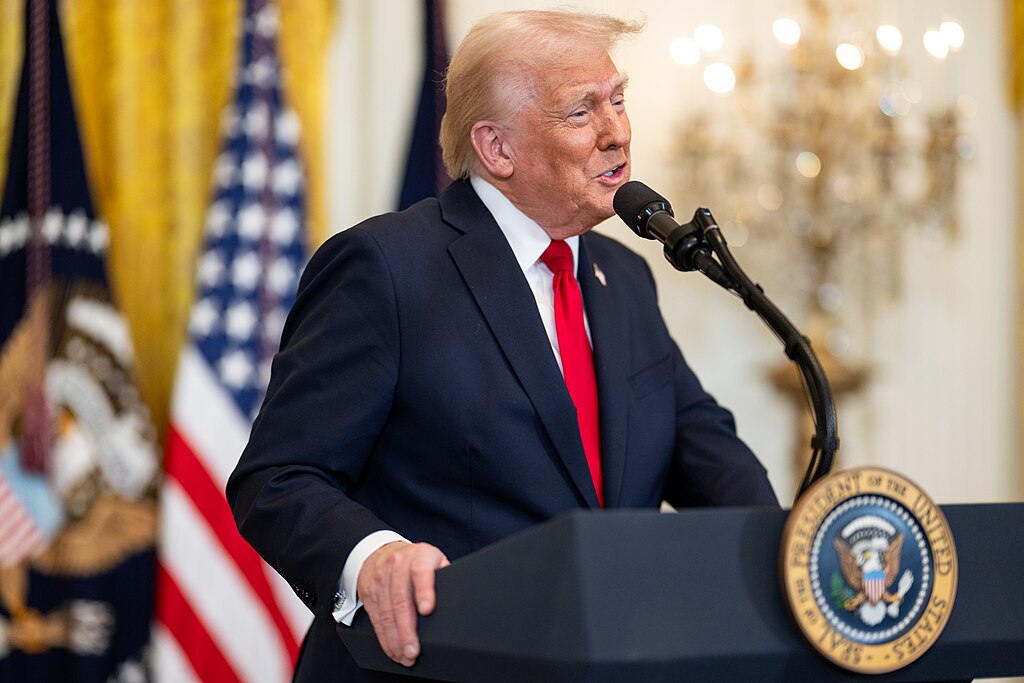
U.S. President Donald Trump said Wednesday that killings linked to Iran’s crackdown on nationwide protests appear to be subsiding, adding that he does not believe Tehran currently plans large-scale executions of demonstrators. His comments come amid rising regional and international concern over the possibility of U.S. military intervention in Iran, a move analysts and diplomats warn could carry serious consequences.
Speaking during an Oval Office event, Trump said information from “very important sources on the other side” suggested a slowdown in violence. However, he stopped short of ruling out military action, saying the United States would continue to closely monitor developments. His remarks follow repeated warnings that Washington could intervene to support protesters, escalating fears of a broader conflict in the Middle East.
Experts caution that U.S. strikes on Iran could backfire by suppressing protests, strengthening the Iranian government’s crackdown, and provoking retaliation, including missile attacks on U.S. bases across the region. In more severe scenarios, analysts warn that military action could accelerate the collapse of Iran’s government, potentially triggering widespread instability, ethnic insurgencies, refugee flows, and loss of control over Iran’s nuclear and missile programs.
Despite the scale of unrest, several recent U.S. intelligence assessments concluded that while the protests pose a serious challenge, the Iranian government does not appear close to collapsing. The demonstrations are widely seen as the most significant domestic challenge Iran has faced since the 1979 Islamic Revolution.
Casualty figures remain disputed. Iranian officials say more than 2,000 people have died since protests began in late December, while human rights groups estimate the toll exceeds 2,600, with many believing the real number is far higher.
Regional anxiety is growing, particularly among Gulf Arab states, which are reportedly urging both Washington and Tehran to de-escalate. The United States has already withdrawn some personnel from the region after warnings that Iran could retaliate against American bases.
While some opposition figures argue only decisive U.S. action can stop the violence, others stress that non-military measures such as economic pressure and cyber operations could be more effective. As Trump continues to signal resolve, the debate over U.S. intervention in Iran remains a defining issue with far-reaching implications.