


 FDA Names Permanent Drug and Biologics Center Chiefs
  Bessent Presses Japan on Fiscal Policy as Yen Struggles
  ICE Agent Arrested in Minneapolis Over Venezuelan Man Shooting
  US Judge Dismisses Imran Ahmed Deportation Lawsuit
  US Delegation Visits Myanmar, Secures Release of American Adam Castillo
  Trump Bans CNN, MS NOW and Politico From White House
  Yemen Fighting Threatens Red Sea Oil Routes
  US-China Experts Push AI Nuclear Safeguards to Prevent Military Escalation
  Kim Yo Jong Warns of Stronger Response to US-Led Military Drills
  Trump Says US Army Base in Poland Talks Make Progress
  Saudi Arabia Shuts East-West Oil Pipeline After Drone Attack
  Appeals Court Rejects Trump Third-Country Deportation Policy
  Trump Administration Removes Confederate Memorial Criticism From Arlington Website
  U.S. Imposes New Visa Restrictions Over South Africa Policies
  South Korea’s Lee Rules Out Military Role in Middle East War


 Add as a preferred source on Google
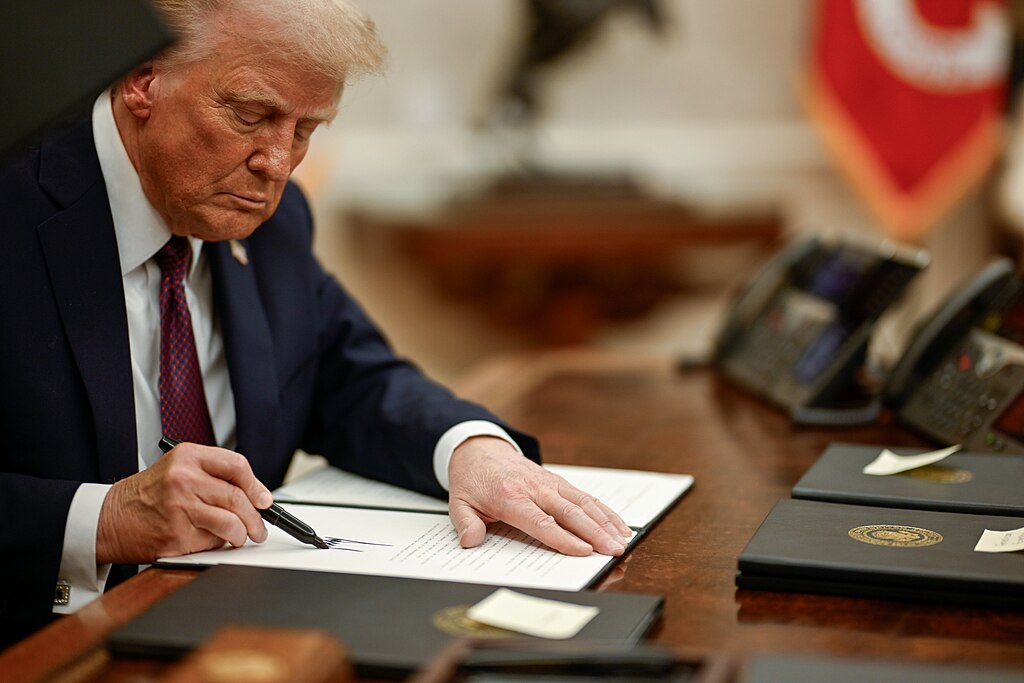
President Donald Trump signed a sweeping executive order on Wednesday aimed at tightening college accreditation standards, a move that could affect access to billions in federal student aid. The order is part of a broader push to reform higher education and hold universities accountable for what the administration calls "poor performance" and "civil rights violations."
Accreditation, while not handled directly by the federal government, is required for institutions to receive federal student loans and grants. Trump directed Education Secretary Linda McMahon to increase oversight of accrediting bodies, potentially limiting or revoking their rights if they fail to enforce high standards.
This action is one of seven education-related measures announced during an Oval Office event. Other initiatives include promoting artificial intelligence education, expanding job training for trades, and launching a new initiative to support historically Black colleges and universities (HBCUs), which includes an annual White House summit.
The administration has already frozen hundreds of millions in funding to several universities, citing inadequate responses to campus antisemitism. Harvard University is currently suing the federal government over this freeze.
Another executive order requires colleges to fully disclose large foreign donations, including the true source and intended purpose, to address growing concerns over foreign influence in U.S. education.
Additionally, Trump ordered the enforcement of laws against unlawful discrimination in admissions and discipline policies. He emphasized that student discipline should be based on behavior rather than racial quotas, taking aim at diversity, equity, and inclusion policies.
The new measures underscore the administration’s effort to reshape higher education by increasing transparency, reducing foreign influence, and emphasizing merit-based standards.







