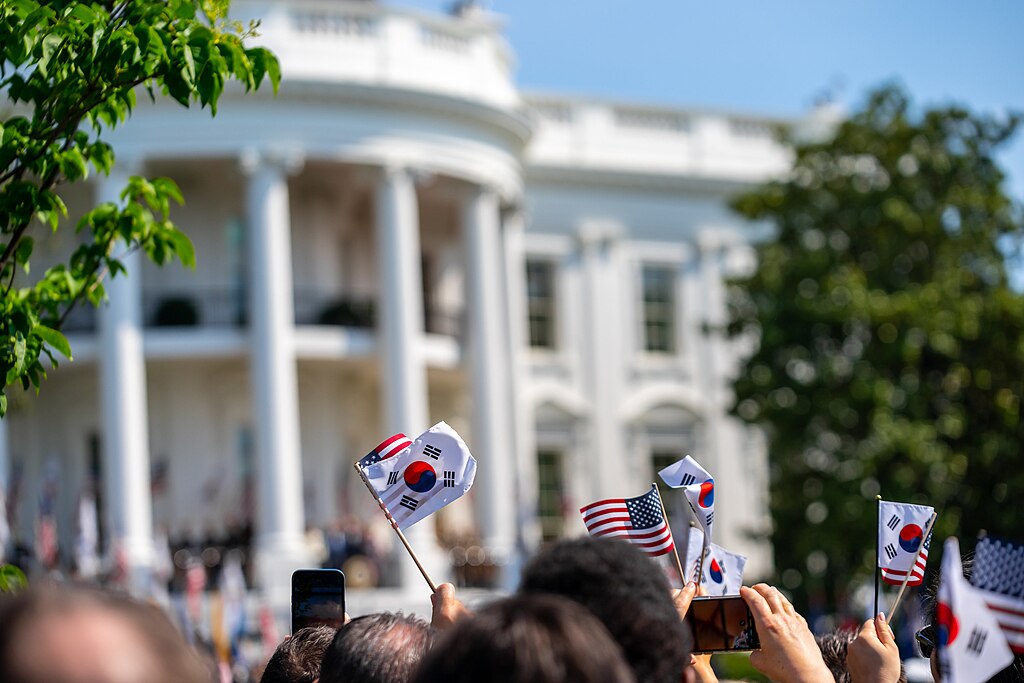
President Donald Trump announced a new trade agreement with South Korea, reducing tariffs on key imports to 15% and securing a $350 billion investment pledge from Seoul. The deal, revealed after meetings at the White House, eases tensions with one of America’s top trading partners and key Asian allies.
Under the agreement, South Korea will invest $350 billion in U.S. projects chosen by Trump and purchase $100 billion worth of American liquefied natural gas and other energy products. Both countries also plan to establish a $350 billion investment fund, with $150 billion earmarked for shipbuilding cooperation.
The new terms replace a previous 25% tariff on South Korean goods such as automobiles, steel, and semiconductors. Trump confirmed that South Korea will allow more U.S. products, including cars, trucks, and agricultural goods, without imposing duties. Meanwhile, tariffs on South Korean chip and pharmaceutical exports will remain competitive with other countries, while rice and beef markets stay protected.
South Korean President Lee Jae Myung hailed the agreement as positioning his country on par or better than other trade partners. Details of the investment structure and implementation timeline remain unclear.
The announcement comes as South Korea’s Samsung Electronics signed a $16.5 billion semiconductor deal with Tesla, while LG Energy Solution secured a $4.3 billion battery supply agreement for Tesla’s energy storage systems.
Lee is expected to visit the White House within two weeks for further discussions, signaling deeper economic and strategic cooperation between the U.S. and South Korea amid evolving global trade dynamics.
This deal follows similar tariff reductions recently reached with Japan, highlighting the U.S. administration’s broader efforts to renegotiate trade terms with major Asian economies.