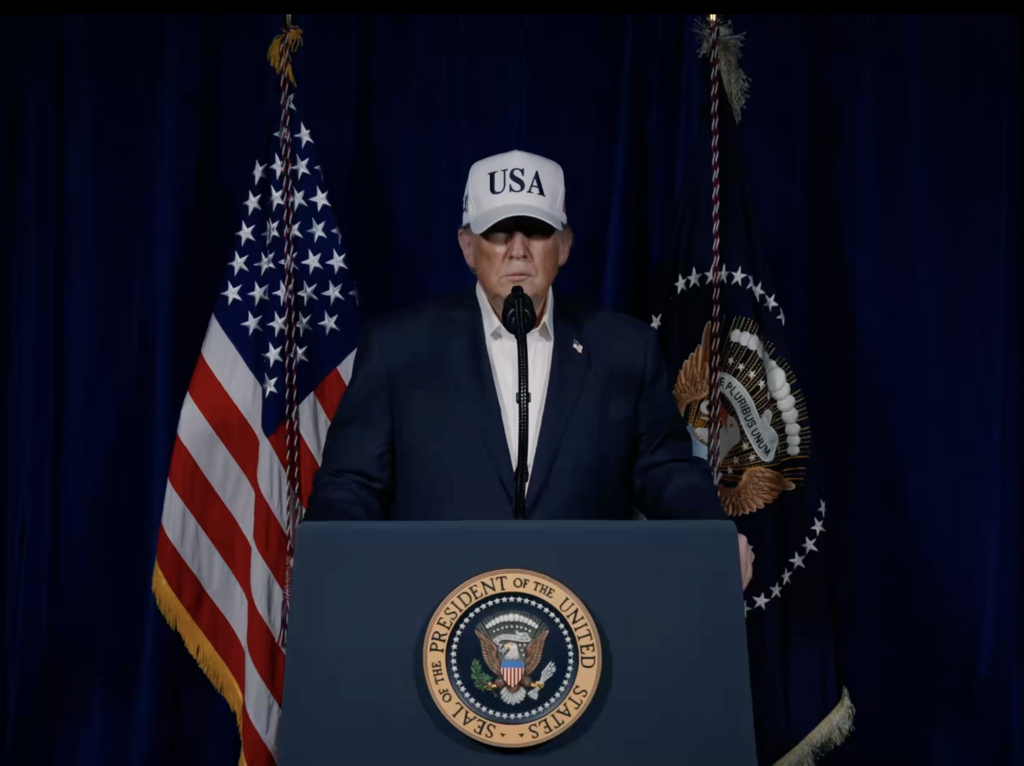
President Donald Trump announced Tuesday evening that he would delay planned military strikes against Iran for two weeks, marking a significant diplomatic breakthrough after weeks of escalating tensions. The suspension came hours before Trump's 20:00 ET deadline and followed intense mediation efforts led by Pakistan.
Trump confirmed the decision came after direct conversations with Pakistani Prime Minister Shehbaz Sharif and Field Marshal Asim Munir. The two-week pause is conditional on Iran's "complete, immediate and safe opening of the Strait of Hormuz," a critical global oil chokepoint that Tehran had effectively blockaded in response to U.S. and Israeli military pressure.
Pakistani Prime Minister Sharif announced that both nations had agreed to an "immediate ceasefire everywhere" and extended an invitation for peace negotiations to be held in Islamabad on Friday. Iran's Foreign Minister Seyed Aragchi confirmed that Tehran would halt its "defensive operations" provided that attacks on Iranian soil also ceased, adding that safe passage through the Strait of Hormuz would be restored.
Trump stated that Washington had already received a 10-point proposal from Iran offering a workable framework for negotiations, and that nearly all major points of disagreement had been resolved. The two-week window, he said, would allow a final agreement to be formally concluded.
Financial markets reacted swiftly to the news. S&P 500 Futures surged more than 2% in after-hours trading, while WTI crude oil futures dropped nearly 13% to $86.21 per barrel — reflecting optimism that a prolonged conflict threatening global oil supplies may be nearing resolution. Reports also indicated that China had quietly encouraged Iran to accept ceasefire terms.
The Iran conflict, now entering its sixth week, had drawn in Israel and several Gulf nations. The Strait of Hormuz alone accounts for roughly 20% of global oil consumption, underscoring the enormous economic stakes tied to this fragile diplomatic moment.