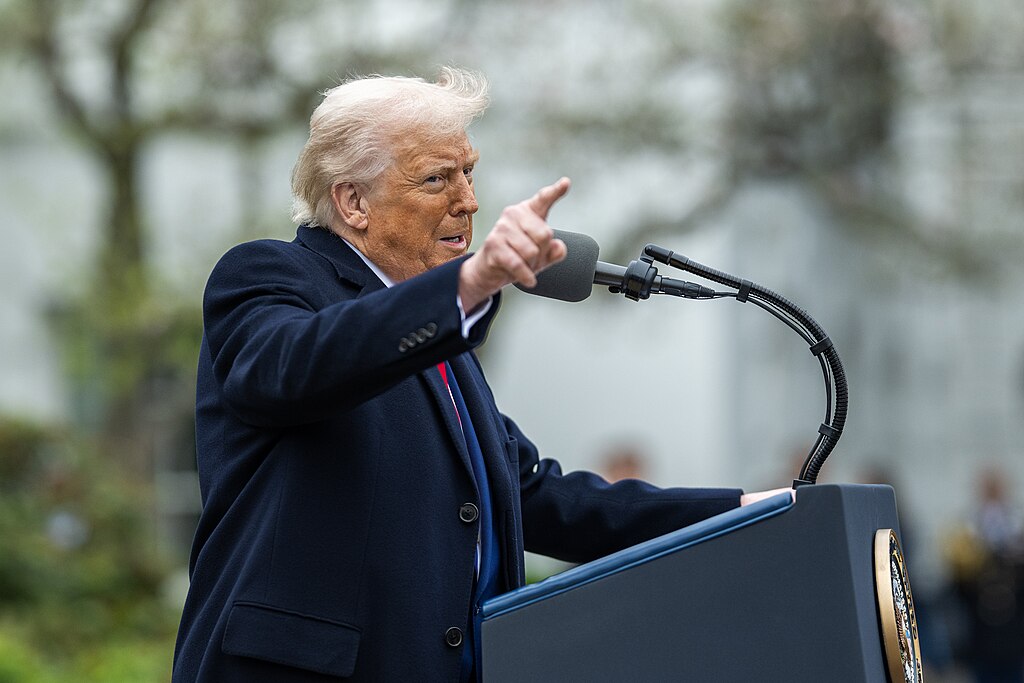
U.S. President Donald Trump escalated his hardline stance on global drug trafficking, declaring that any country involved in sending illegal drugs into the United States could face military attacks. Speaking during a White House cabinet meeting, Trump referenced cocaine shipments originating from Colombia and suggested that foreign governments enabling drug production or distribution should expect potential U.S. retaliation.
Trump’s comments follow a series of U.S. missile strikes targeting alleged drug-trafficking vessels in the Caribbean and Pacific, operations that have reportedly killed dozens. The increased military presence in the region has intensified tensions, particularly with Venezuela, where Washington claims President Nicolás Maduro is deeply tied to the drug trade—allegations he firmly denies. Trump has recently hinted at the possibility of U.S. intervention in Venezuela, saying the threat of strikes extends “not just [to] Venezuela.”
Colombian President Gustavo Petro quickly responded to Trump in a post on X, emphasizing that Colombia dismantles a drug-producing laboratory roughly every 40 minutes, all “without missiles.” Petro, who is currently sanctioned by the Trump administration, invited Trump to witness Colombia’s anti-drug operations firsthand but issued a sharp warning about national sovereignty. “Do not threaten our sovereignty, or you will awake the Jaguar,” Petro wrote, asserting that an attack on Colombian territory would constitute an act of war.
Trump, however, maintained that countries allowing cocaine manufacturing pose a direct threat to American lives, stating that Colombia “makes cocaine, they have cocaine manufacturing plants, and then they sell us their cocaine.” The exchange underscores growing geopolitical friction as the U.S. continues targeting international drug networks. Both leaders appear entrenched in their positions, signaling escalating rhetoric around drug policy, regional security, and military force.