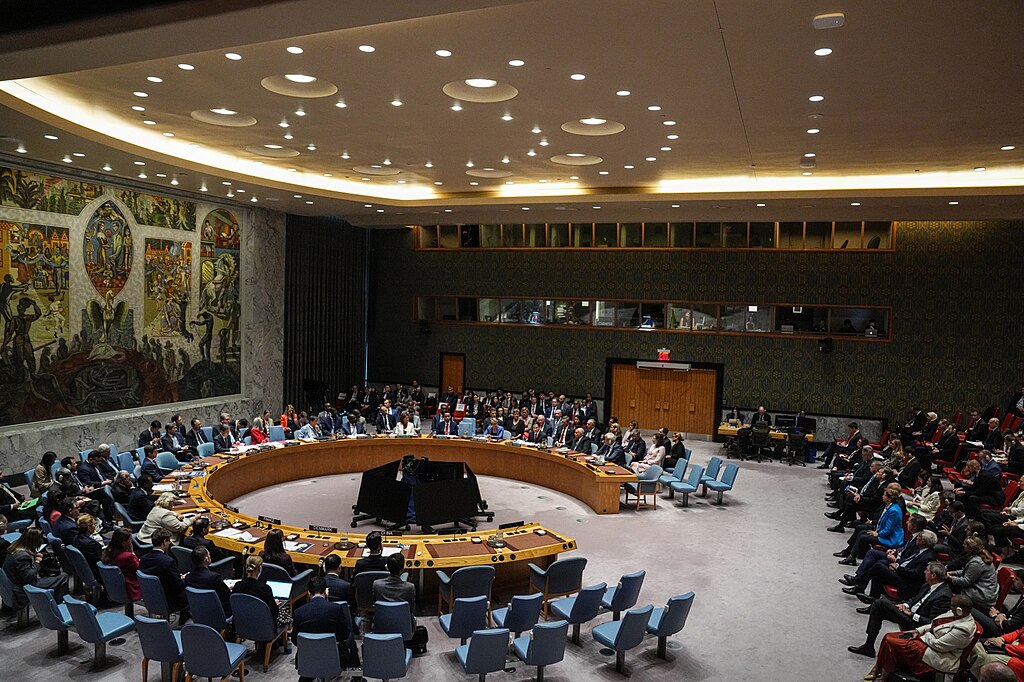
The United Nations Security Council is preparing for a crucial vote on Friday regarding a resolution introduced by Russia and China to delay the reimposition of sanctions on Iran for six months. However, diplomats indicate the measure is unlikely to pass due to limited support and anticipated abstentions.
Under the 2015 nuclear deal between Iran and world powers, sanctions relief was granted in exchange for curbing Iran’s nuclear activities. But after Britain, France, and Germany triggered a dispute mechanism citing Tehran’s violations, all U.N. sanctions are scheduled to automatically return at 8 p.m. EDT Friday (0000 GMT Saturday). The proposed resolution would temporarily halt this snapback, creating space for renewed negotiations.
For the resolution to pass, it requires at least nine affirmative votes in the 15-member Security Council and no vetoes from permanent members Britain, France, or the United States. Western diplomats have already signaled skepticism, suggesting the measure will fail due to both veto threats and widespread abstentions.
In an effort to prevent sanctions from being reimposed, European powers have offered Iran a compromise: a delay of up to six months, provided Tehran restores access for U.N. nuclear inspectors, addresses its growing stockpile of enriched uranium, and commits to talks with the United States. This proposal aims to open the door to a long-term diplomatic solution.
Iranian President Masoud Pezeshkian stated Thursday that Tehran is prepared for any outcome, emphasizing that the country would adapt its policies if sanctions are reinstated. While expressing hope that punitive measures can still be avoided, he underscored Iran’s readiness to withstand international pressure.
The outcome of Friday’s vote could mark a turning point for the 2015 nuclear agreement, with potential consequences for global security, energy markets, and diplomatic relations between Iran, the West, Russia, and China.