
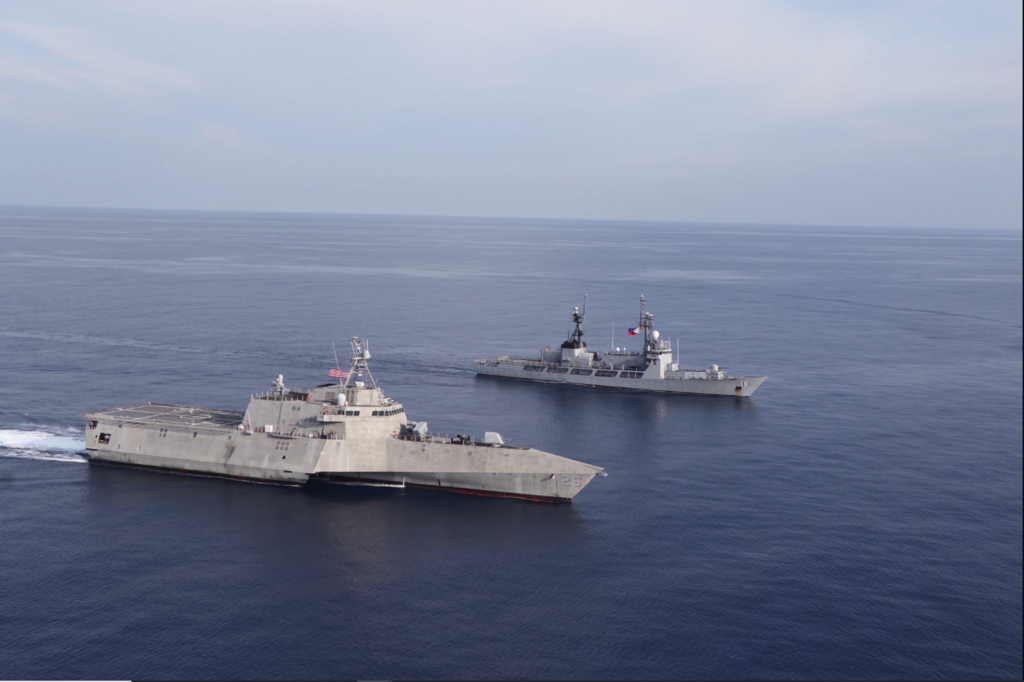
The United States, Australia, and the Philippines wrapped up their second trilateral maritime exercises of 2025 in the South China Sea, reinforcing their collective commitment to freedom of navigation and regional security in one of the world's most contested waterways.
The four-day drills, held from April 9 to 12, brought together a powerful combination of naval vessels, fighter jets, and surveillance aircraft in coordinated operations designed to sharpen maritime defense capabilities and deepen interoperability among the three allied nations. The Philippine military highlighted that the exercises reflect a "deepening defense cooperation" and a shared dedication to upholding stability across the Indo-Pacific region.
Each country contributed significant military assets to the drills. The Philippines deployed its FA-50 light combat aircraft, Australia sent P-8A Poseidon maritime patrol planes, and the United States contributed the USS Ashland, a dock landing ship equipped for amphibious operations. The combination of air and sea assets underscored the multilateral nature of the response to growing security concerns in the region.
The exercises come at a particularly sensitive time. The Philippines and China have been locked in a series of confrontations in the South China Sea, including an incident where Chinese forces reportedly fired flares at a Philippine Coast Guard aircraft. Beijing, which claims nearly the entire South China Sea despite competing territorial claims from several neighboring nations and rulings from international tribunals, condemned the drills as destabilizing. A spokesperson for China's Southern Theater Command accused Manila of "stirring up troubles" by involving outside nations in regional patrols.
Looking ahead, the annual Balikatan war games between the Philippines and the U.S. are set to launch on April 20, marking a historic expansion with Japan joining as a full participant alongside Australia — a significant shift in the regional security framework as tensions in the South China Sea continue to escalate.


