
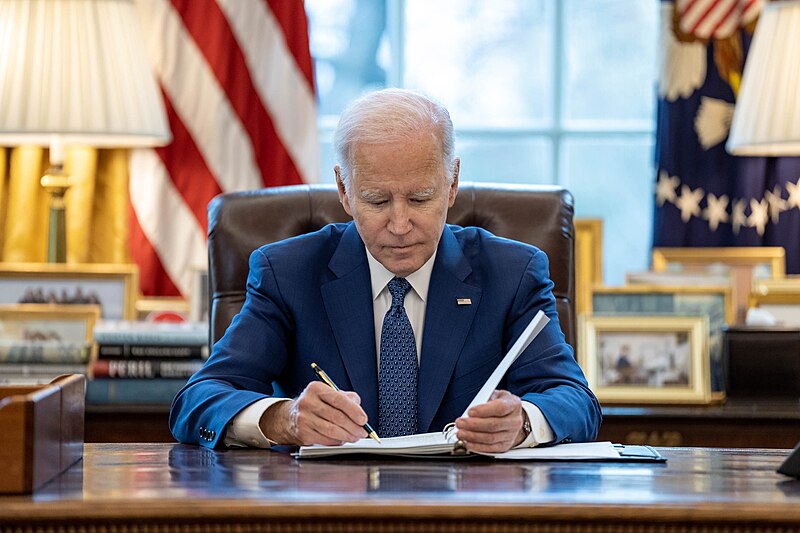
The administration of US President Joe Biden announced that businesses would be able to apply for almost $11 billion in grants and loans for clean energy projects. The initiative is part of the bipartisan Inflation Reduction Act that was signed into law last year.
The Biden administration announced on Tuesday almost $11 billion in grants and loans to rural electric cooperatives, utilities, and energy providers for clean energy projects. The funds would come from the Inflation Reduction Act that was signed into law in August last year. During a Monday press call, administration officials told reporters that expanding clean energy to rural communities is important for the country to meet its goal of net-zero emissions by 2050.
“This is an exciting and historic day and continues an ongoing effort to ensure that rural America is a full participant in the clean energy economy,” said Agriculture Secretary Tom Vilsack.
The US Department of Agriculture said $9.7 billion in grants would be made available to rural electric cooperatives starting July 31 for deploying renewable energy, zero-emission, and carbon capture systems. Another $1 billion in partially forgivable loans would be made available to renewable energy developers and electric service providers like municipal and tribal utilities starting on June 30 for funding wind, solar, geothermal, biomass, and other renewable energy projects.
Democratic Senator Debbie Stabenow, who chairs the Senate Agriculture Committee, said during a White House event to mark the announcement that the funds were “an important piece of how we commit to rural America.”
White House adviser John Podesta told reporters in a call that the money would bring jobs to rural communities. National climate adviser Ali Zaidi said the investment is a “game-changer.”
Meanwhile, a US official said that the United States has already turned back 2,400 migrants, including nationals from Cuba, Nicaragua, and Venezuela, to Mexico following the expiration of the controversial Title 42 border policy last week.
Assistant secretary for the Department of Homeland Security Blas Nunez-Neto said around 2,400 people were turned back to Mexico since Title 42’s expiration, with thousands of other migrants brought back to 10 other countries like Colombia, Peru, and Honduras. Nunez-Neto added that Mexico and Guatemala have also begun to deploy law enforcement and military officers to their borders.
Photo: Adam Schultz (White House)/Wikimedia Commons(CC by 2.0)



.jpg)